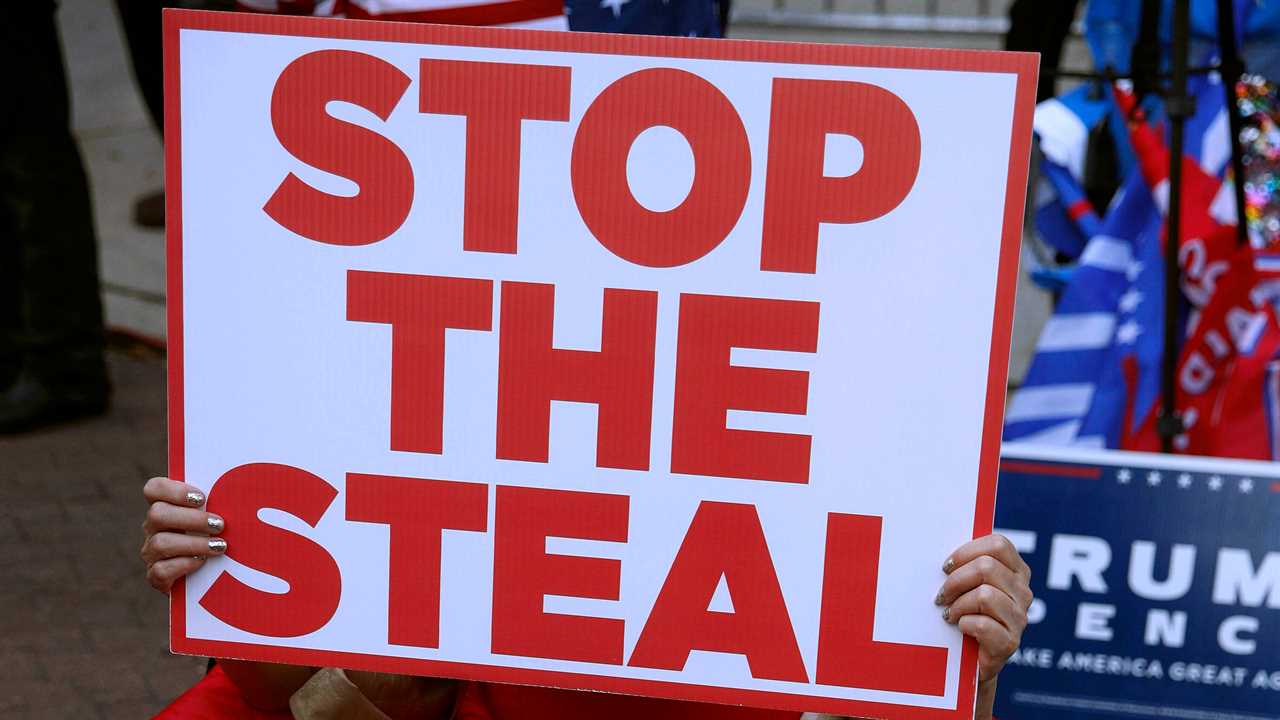
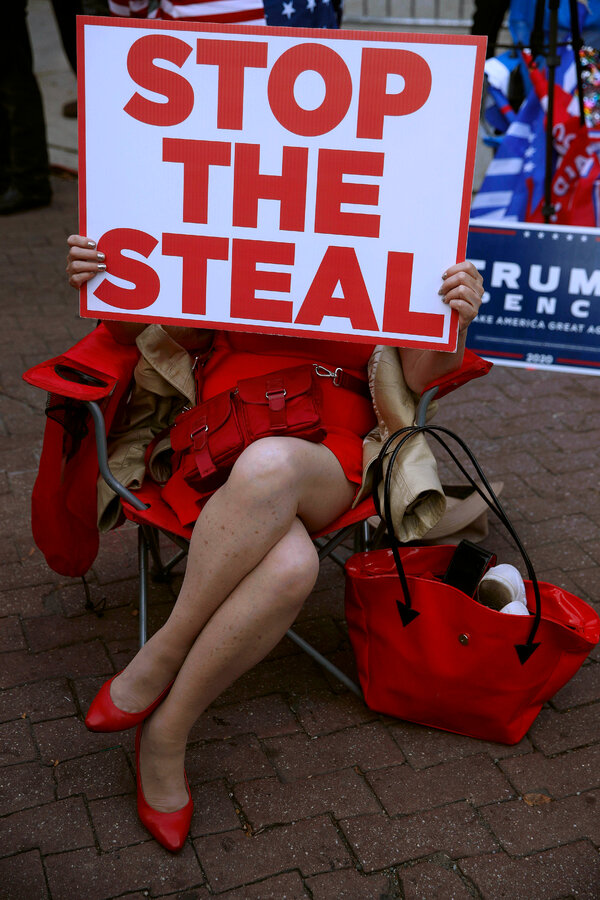
Fifteen days after President Trump lost the election, there is no indication that any significant voter fraud took place.
That hasn’t stopped the president and his supporters from making all kinds of claims to the contrary. Over the past two weeks, there has been a whole lot of shouting, a deluge of legal filings and plenty of denial from Mr. Trump and his allies.
What there hasn’t been? Any real evidence that the election was unfairly decided.
The clearest tell that Mr. Trump’s effort is a security blanket and a prayer strategy is the difference between what Mr. Trump’s supporters say in the press and what they say in court, where lying under oath is a felony.
On Nov. 7, the day most media outlets called the race for Joe Biden, Rudy Giuliani stood outside a landscaping business in Philadelphia, making false claims about widespread election malfeasance.
“This is a gross miscarriage of the process that would assure that these ballots are not fraudulent,” he said. “It’s a fraud, an absolute fraud.”
Under questioning from a federal judge in Pennsylvania on Tuesday, Mr. Giuliani made a different admission: “This is not a fraud case,” he said.
Since Election Day, the Trump campaign and its allies have filed more than 30 lawsuits that seek to stop the certification of results or have ballots thrown out. None have gotten any real legal traction, as lawyers back away from suggestions that the election was stolen, admit under oath that there’s no sign of fraud and have their evidence dismissed as unreliable. One minor win in Pennsylvania set aside a relatively small number of ballots that hadn’t been counted yet — an inconsequential victory since Mr. Biden had already won the state without them.
Law firms that originally agreed to represent the Trump campaign and the Republican Party have withdrawn from the litigation. The lead counsel who has taken over in a Pennsylvania case, Marc Scaringi, said before he took the job that Mr. Trump’s legal effort “will not reverse this election.”
Even if Mr. Trump’s complaints had some merit (which, again, they do not), they would be unlikely to change the outcome of the election. A losing candidate facing a close margin — maybe several hundred votes — could hope for some luck in a recount.
That is not the situation faced by Mr. Trump, who would need to reverse the outcome in at least three swing states to reach 270 electoral votes. Even in this fanciful chain of events, he would need to overcome a deficit of at least 45,000 votes across the three closest states.
Of course, reality isn’t stopping Mr. Trump, whose Twitter feed is so packed with fantastical claims that it’s starting to look like a carton of cigarettes, plastered with warnings from the social media company that his statements are “disputed.”
Even so, from statehouses to the halls of Congress, most Republicans have refused to acknowledge Mr. Biden as the next president, fearing Mr. Trump could stir up a backlash from the party’s base.
Spewing disinformation into the public domain clearly influences how a sizable portion of Americans view current events. Look at the “debate” over mask-wearing, a scientifically proven way to help stop the spread of the coronavirus.
Yet, just as virus deniers cannot not wish away a pandemic, all the political machinations of Mr. Trump and his supporters cannot change the outcome of the election.
Mr. Biden will be the next president. But how divided the country remains when he takes office will have a lot to do with Mr. Trump.
A sizable minority of Americans believe Mr. Trump’s claims. A new poll released on Wednesday by Monmouth University found that 44 percent of Americans think we do not have enough information about the vote count to know who won the election. Nearly one-third believe Mr. Biden won only because of voter fraud.
In Michigan on Tuesday, two Republican members of the Wayne County canvassing board initially refused to certify the county’s election results — a move that could have disenfranchised hundreds of thousands of voters, including every voter in Detroit — before backing down after an outcry from local voters and officials.
Their effort was cheered on by a top legal adviser to the Trump campaign.
Drop us a line!

The virus hurt Trump’s campaign. But maybe it also helped.

… Seriously
“Hardest thing I’ve done.”
North Carolina election law requires voters to be alive on Election Day. So, a local elections director blocked her recently deceased mother’s ballot.