ENGLAND’S three tier system for curbing the Covid spread will return on December 2 – with millions facing stricter restrictions than before.
But with cases falling and the R rate down for the third week in a row, many have been left questioning why they are under harsher rules.
The Government says the allocation of tier levels has been determined by the following factors:
- Case detection rate (in all age groups and, in particular, amongst the over 60s);
- How quickly case rates are rising or falling;
- Positivity in the general population;
- Pressure on the NHS – including current and projected (3-4 weeks out) NHS capacity – including admissions, general/acute/ICU bed occupancy, staff absences; and
- Local context and exceptional circumstances such as a local but contained outbreak.
A document published by Public Health England has revealed in greater detail how the tier level was decided for each area.
It includes a chart showing how close each region is to moving up or down each tier, with Suffolk close to the coveted Tier 1 and Nottinghamshire and Warwickshire close to dropping down to Tier 2.
But PHE says that no rigid thresholds have been set for changing tier because the key indicators, listed above, need to be viewed in context.
Instead, health bosses have set out a framework to show how each area has been allocated its tier.
This includes not just the underlying prevalence but also how the spread of the disease is changing in areas, they said.
Below is the breakdown for each region…
EAST MIDLANDS
Tier 3
- Leicester and Leicestershire
- Derby and Derbyshire
- Lincolnshire
- Nottingham and Nottinhamshire
Tier 2
- Northamptonshire
- Rutland
CASE DETECTION RATES
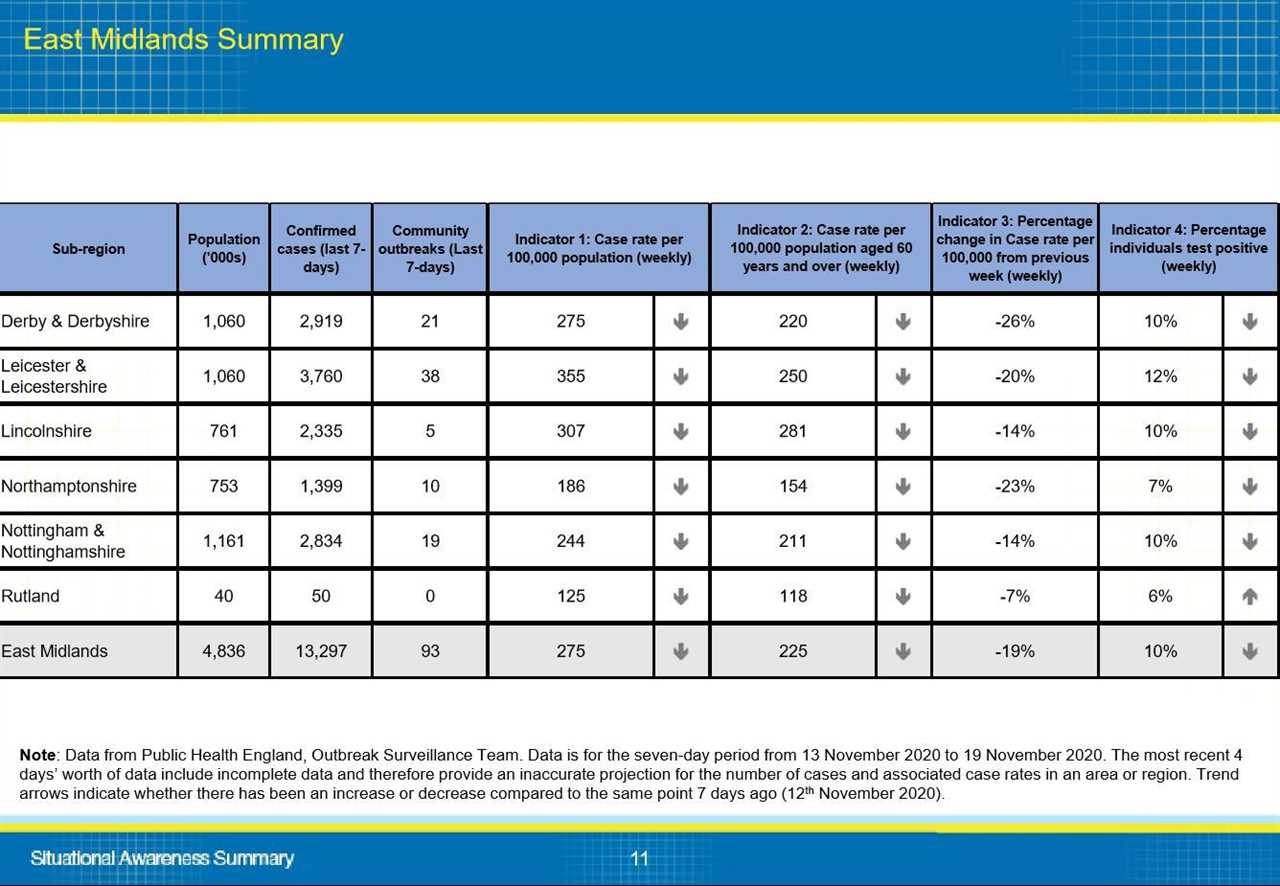
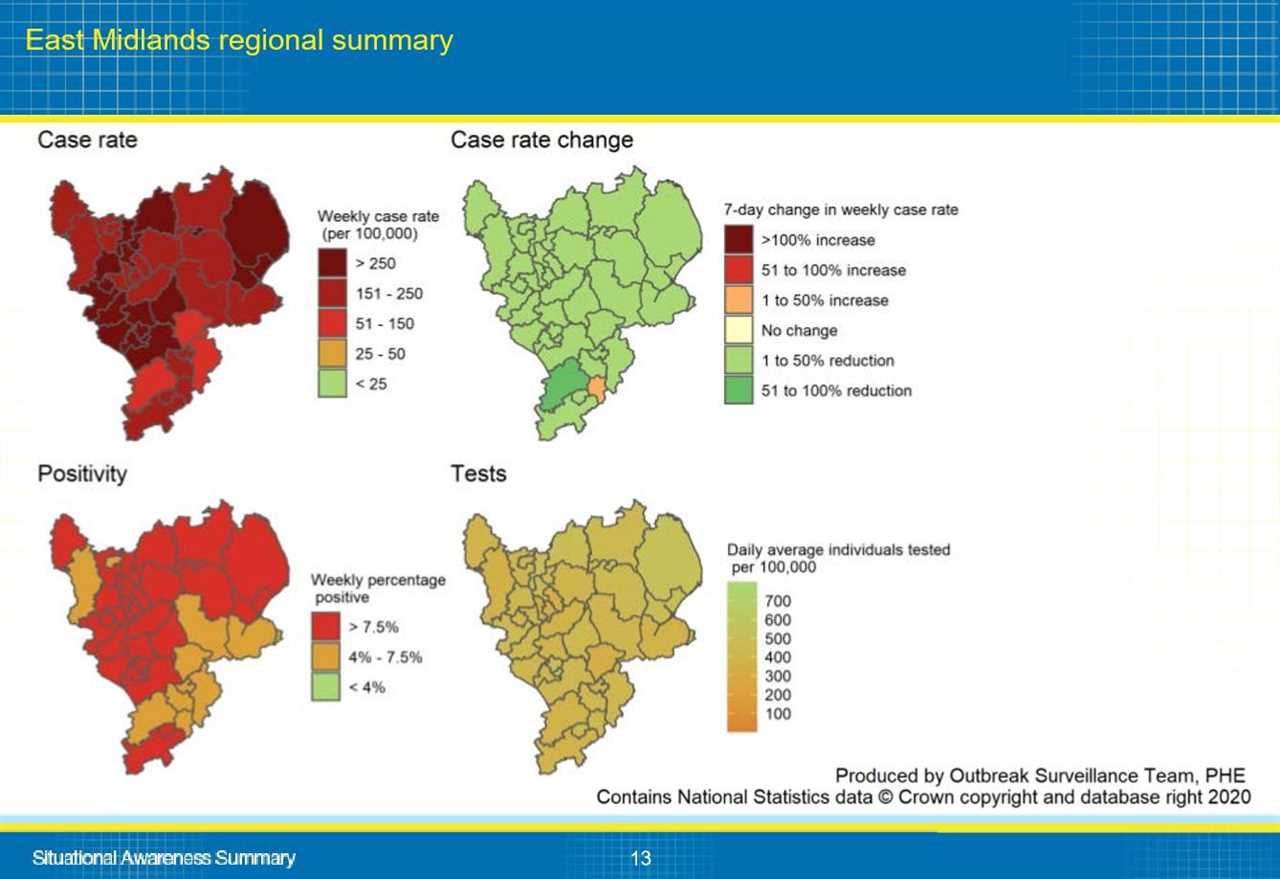
Data from Public Health England shows that cases were falling across all areas in the East Midlands, last week. But as the table above shows, the percentage of people testing positive is on the rise across the region.
In Rutland there were no reported outbreaks of Covid in the week ending November 19.
NHS PRESSURE
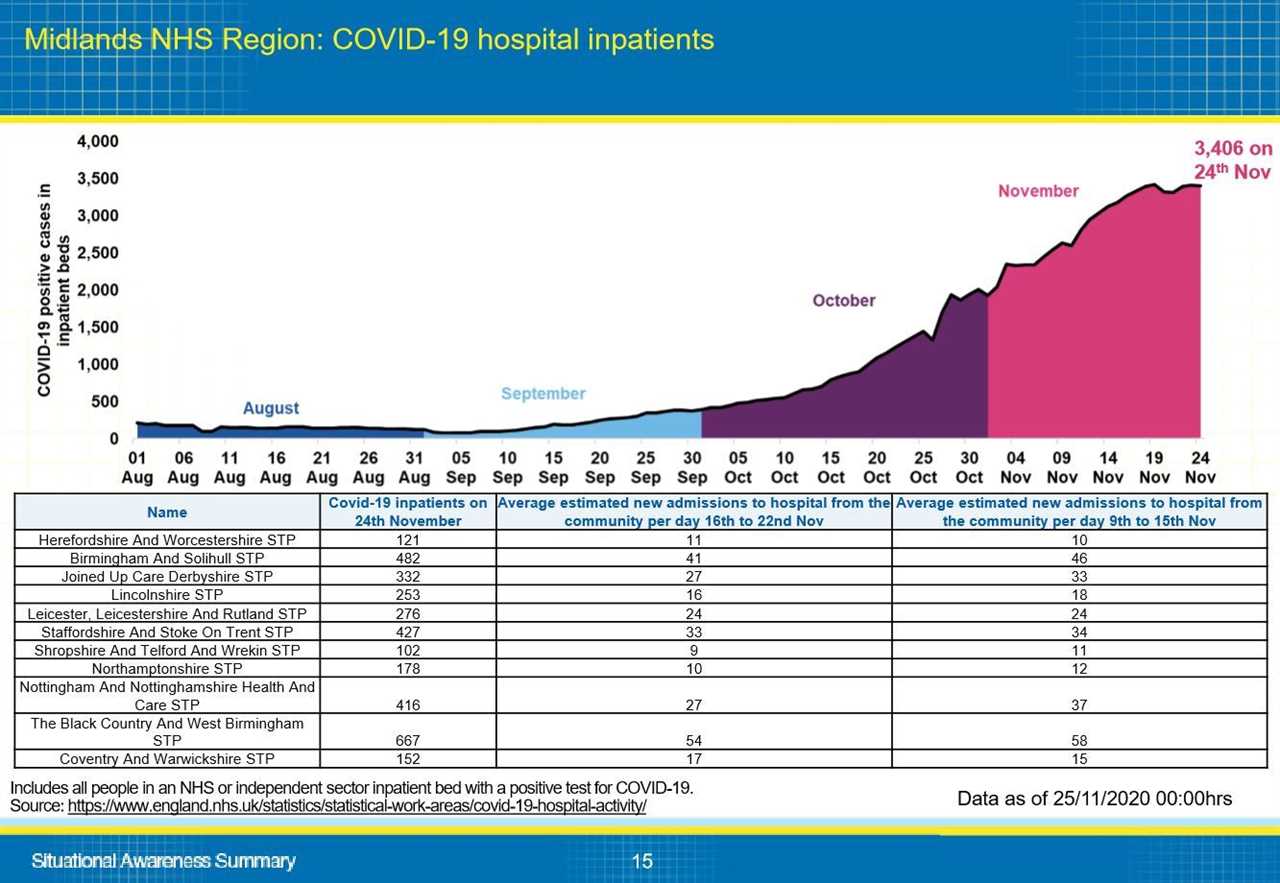
As of November 24, there were 3,406 patients with coronavirus in hospitals across the East Midlands.
The Black Country And West Birmingham STP is the busiest organisation with an average estimated 58 new admissions to hospital from the community per day between November 9 and 15.
EAST OF ENGLAND
Tier 2
- Bedfordshire and Milton Keynes
- Essex, Thurrock and Southend on Sea
- Norfolk
- Cambridgeshire and Peterborough
- Hertfordshire
- Suffolk
CASE DETECTION RATES
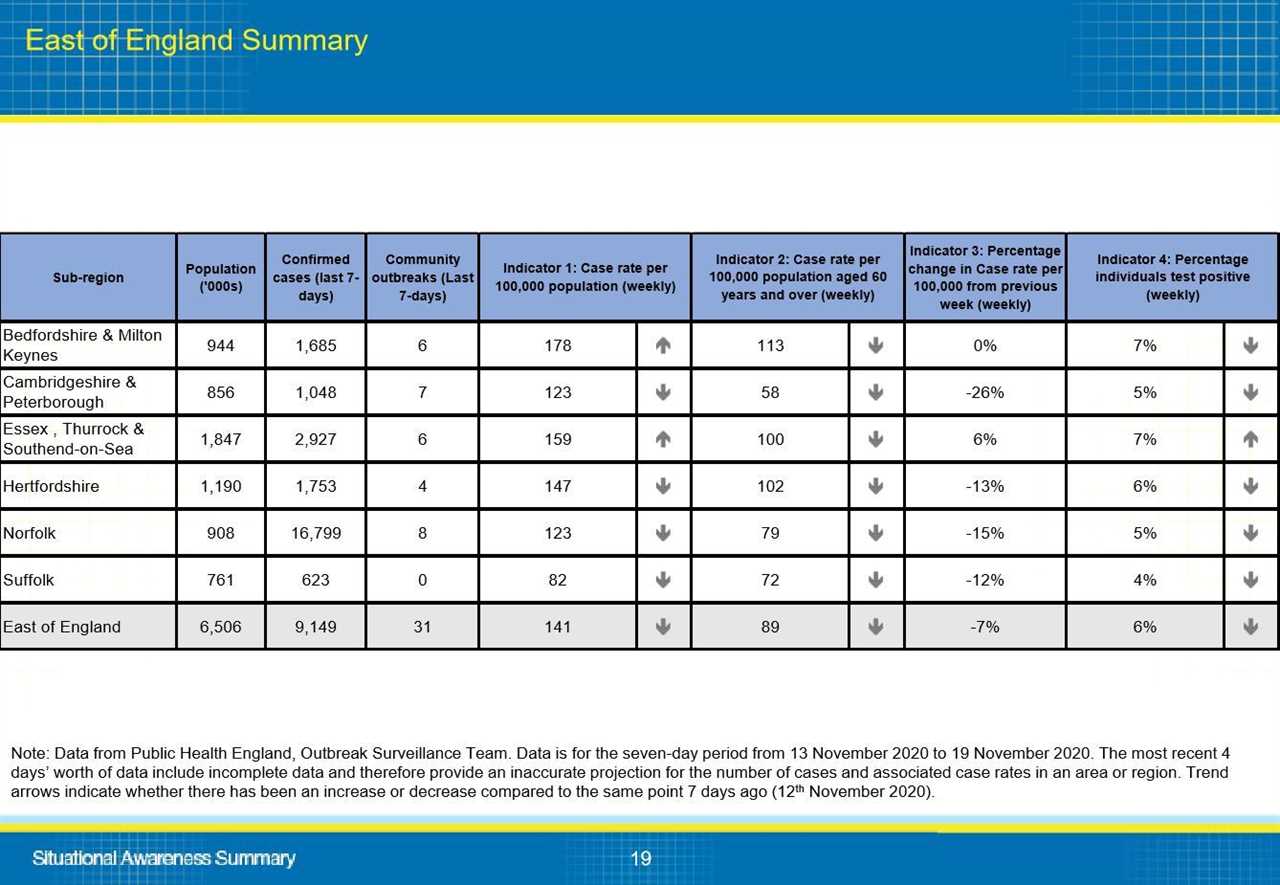
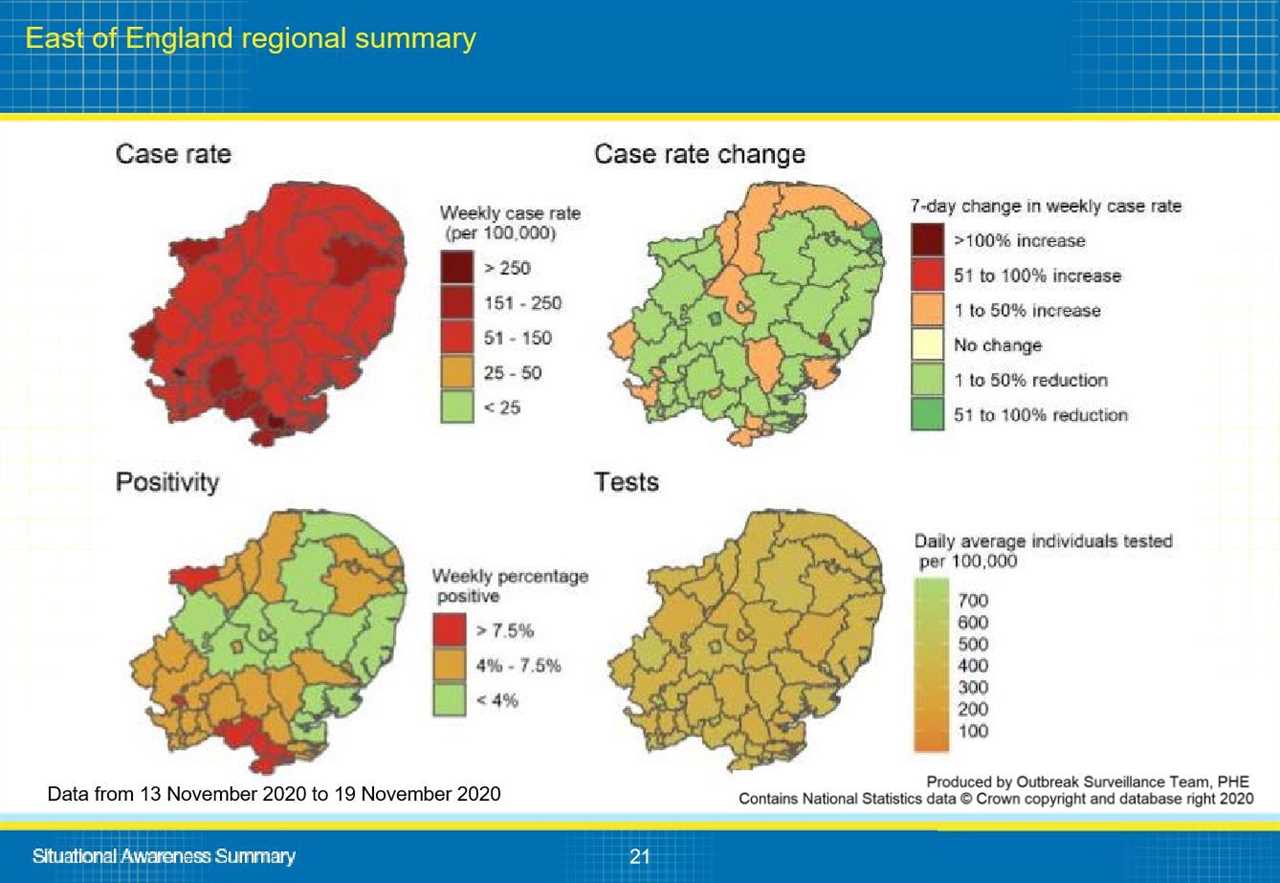
It’s a bit of a mixed picture for the East of England with cases falling overall for the region but with some slight increases in Bedforshire and Milton Keynes.
Parts of Essex, Thurrock and Southend-on-Sea have also seen some small community outbreaks in the week up to November 19.
There is an improving picture across the majority of Suffolk though, with the case rate having fallen to 82 per 100,000 with case rates in the over 60s falling.
NHS PRESSURE
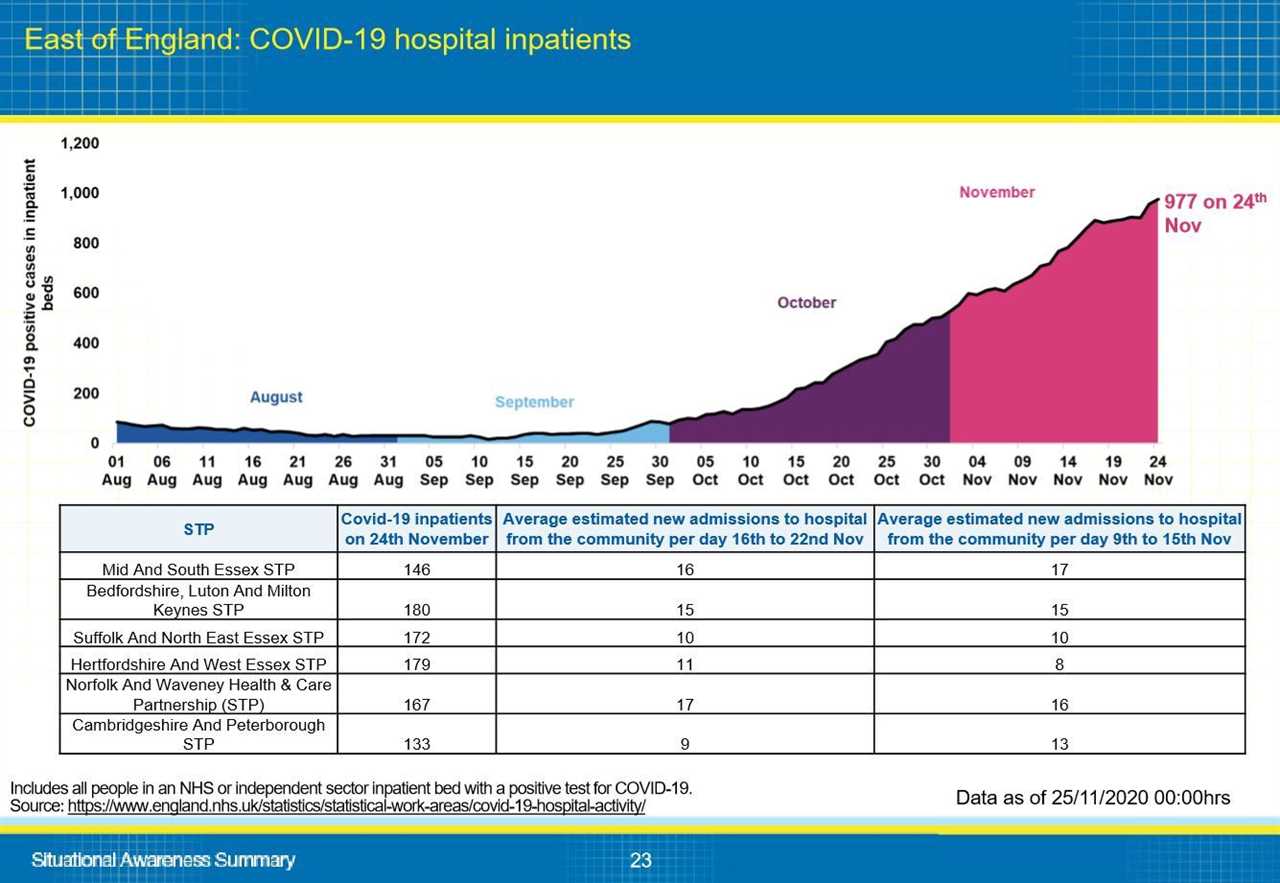
There were 977 Covid positive patients in hospitals across the East of England region as of November 24.
Each trust has about an equal level of patients, but Mid and South Essex has slightly more with an average of 17 new Covid admissions every day.
LONDON
Tier 2
- London
CASE DETECTION RATES
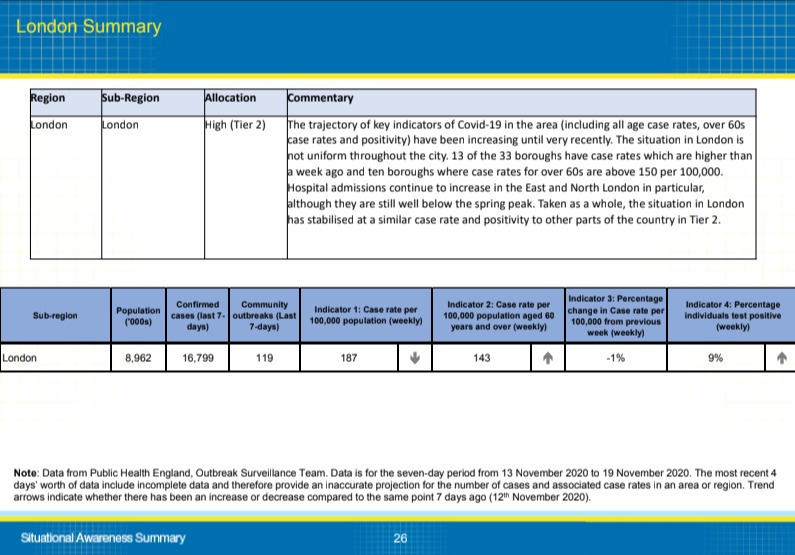
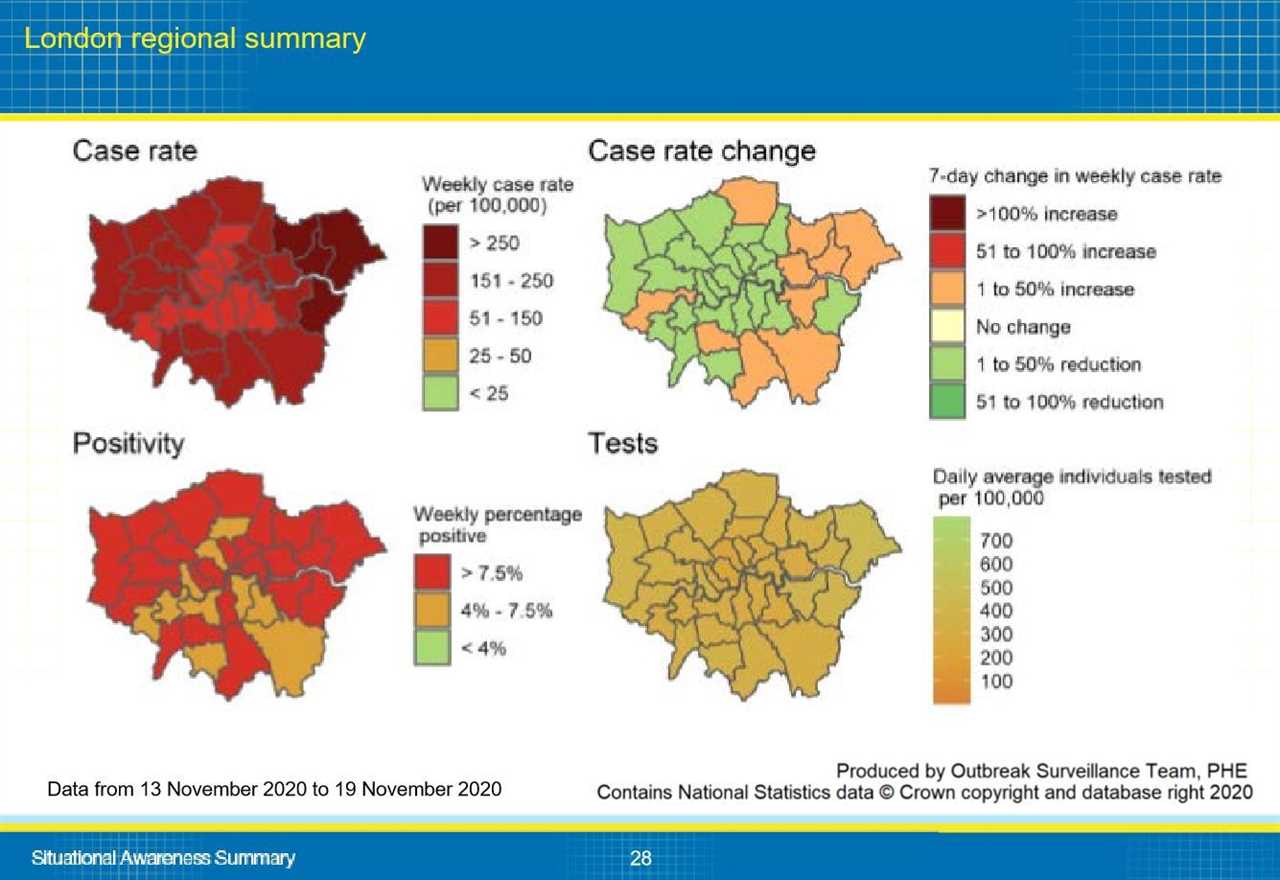
The data shows that the levels of each key indicator has been increasing in the capital until very recently.
However, the situation across London is not uniform – 13 of the 33 boroughs have case rates which are higher than a week ago.
Ten boroughs where case rates for over 60s are above 150 per 100,000.
NHS PRESSURE
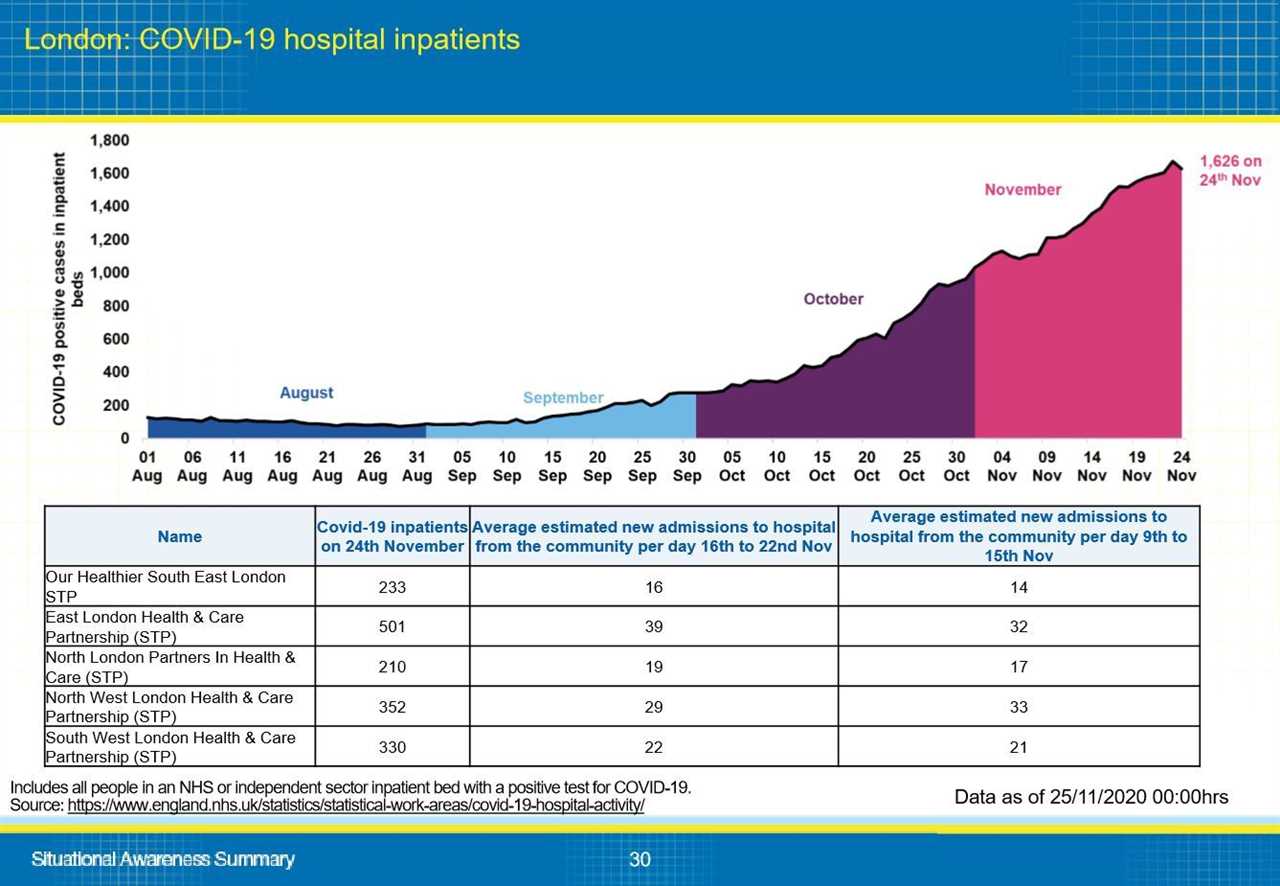
Hospital admissions continue to increase in the East and North London in particular, although they are still well below the spring peak.
Taken as a whole, the situation in London has stabilised at a similar case rate and positivity to other parts of the country in Tier 2.
NORTH EAST
Tier 3
- Tees Valley
- North East 7
CASE DETECTION RATES
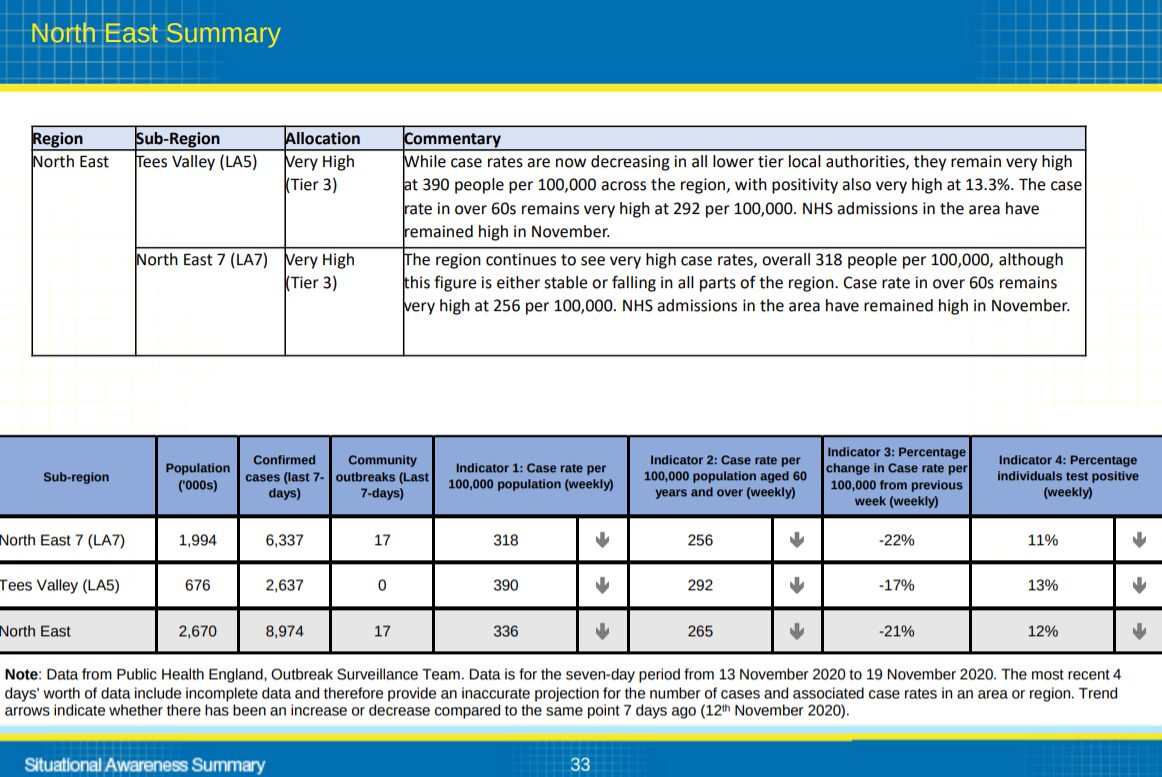
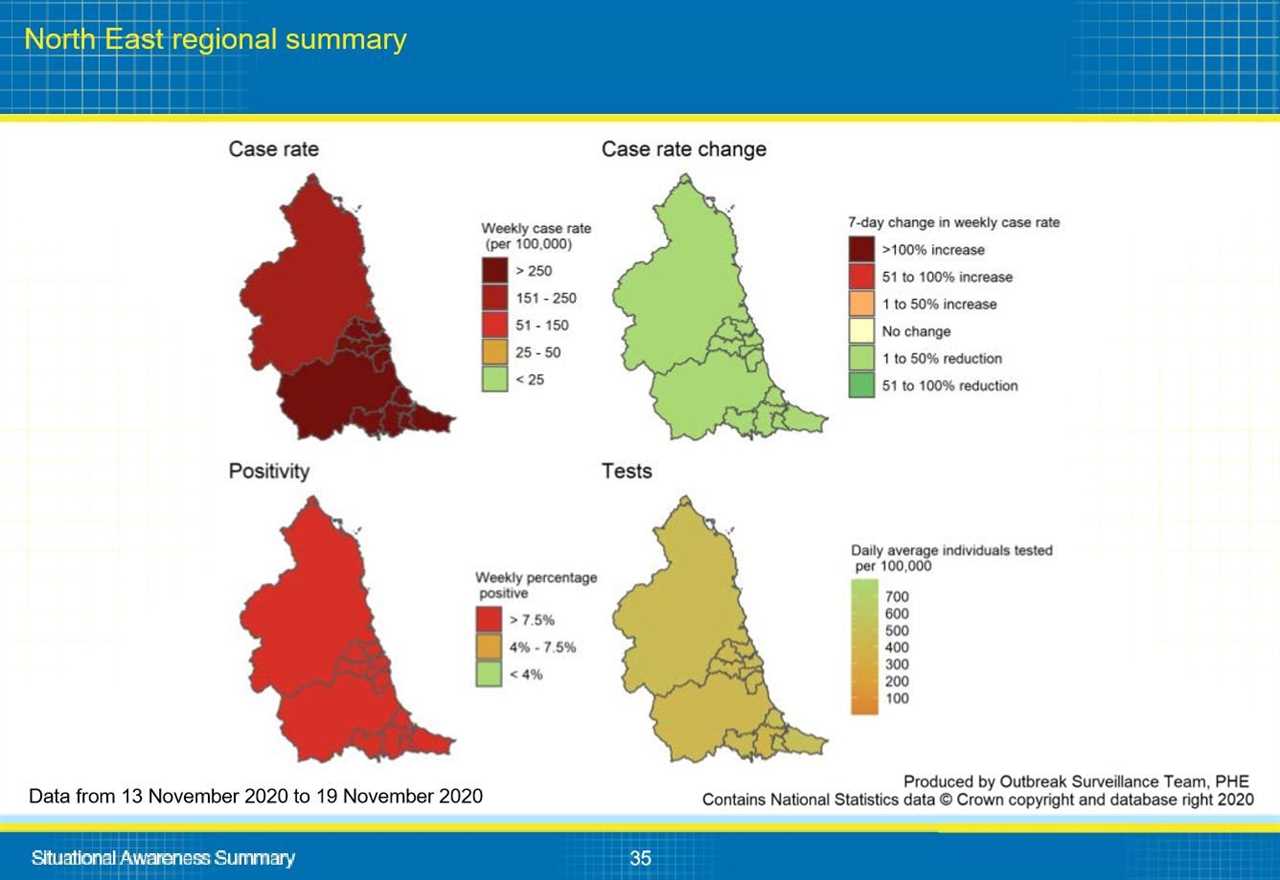
While case rates are now decreasing in all lower tier local authorities, they remain very high at 390 people per 100,000 across the Tees Valley, with positivity also very high at 13.3 per cent.
Meanwhile the case rate in the over 60s is very high at 292 per 100,000.
The rest of the region is continuing to see very high case rates – overall 318 people per 100,000, although this figure is either stable or falling in all parts of the region.
Case rate in over 60s remains very high at 256 per 100,000.
NHS PRESSURE
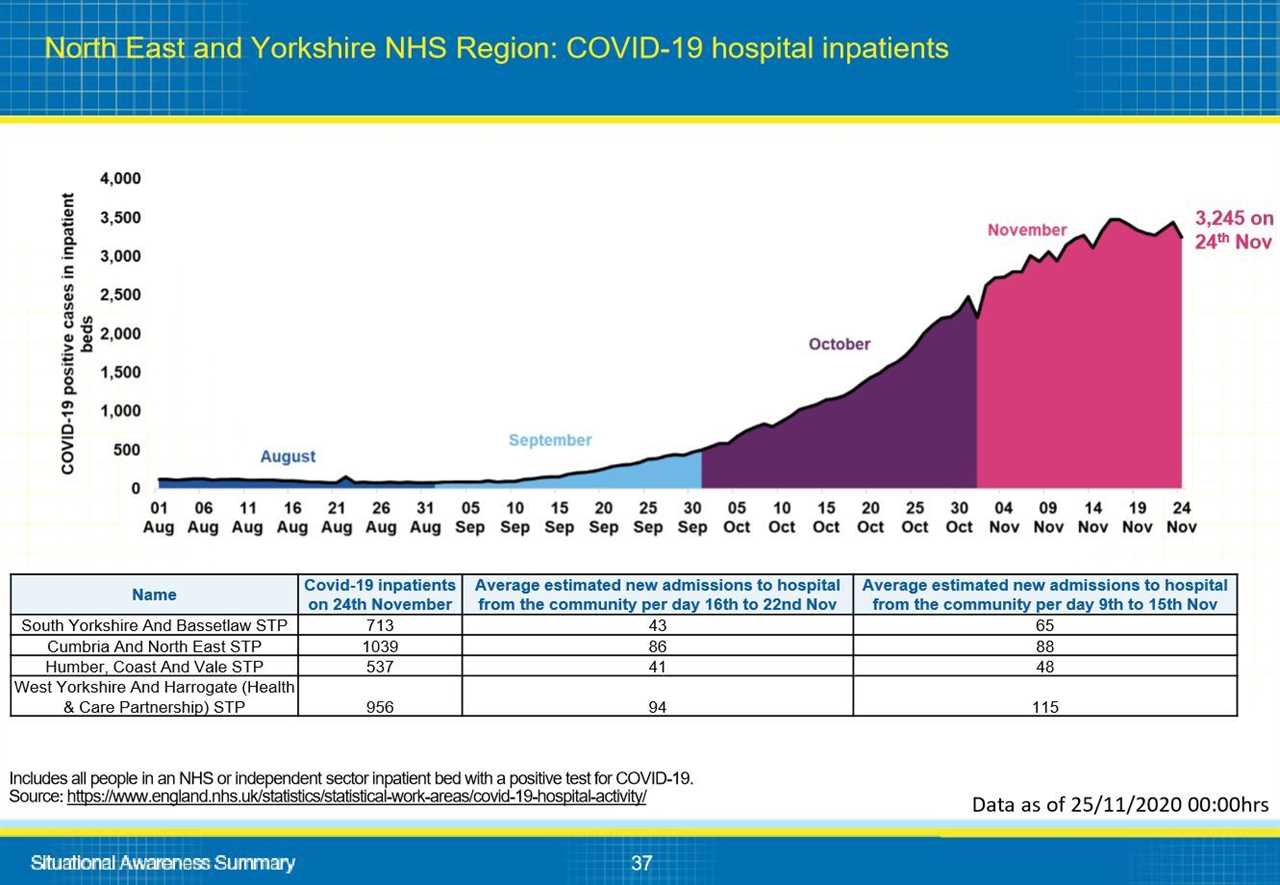
For the entire region NHS admissions have remained high throughout November.
There were 3,245 Covid-19 positive patients on the wards as of November 24, the most recent data shows.
Cumbria and North East was the trust with the most Covid patients with 1,039 people sick with the bug.
NORTH WEST
Tier 3
- Greater Manchester
- Lancashire, Blackpool, and Blackburn with Darwen
Tier 2
- Liverpool City Region
- Cheshire (including Warrington)
- Cumbria
CASE DETECTION RATES
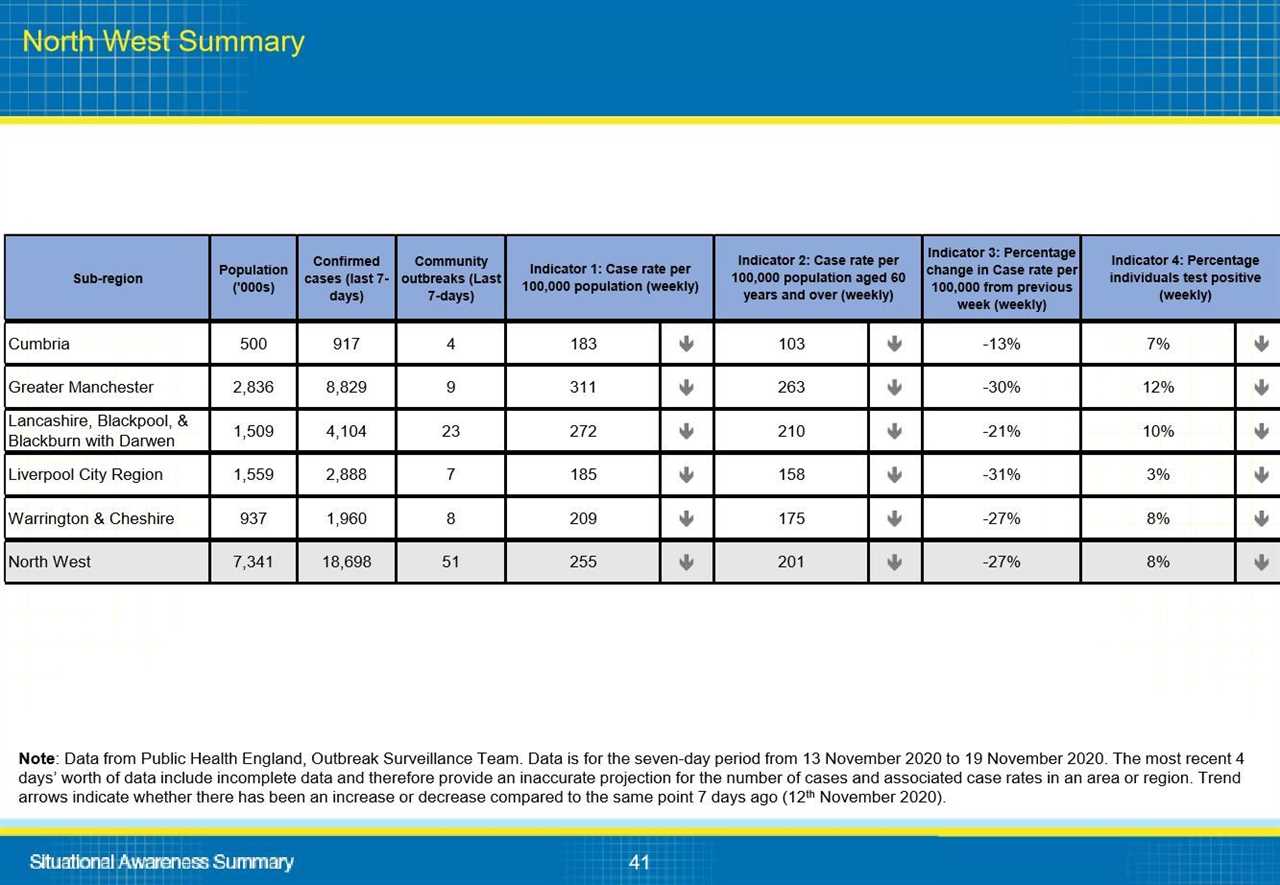
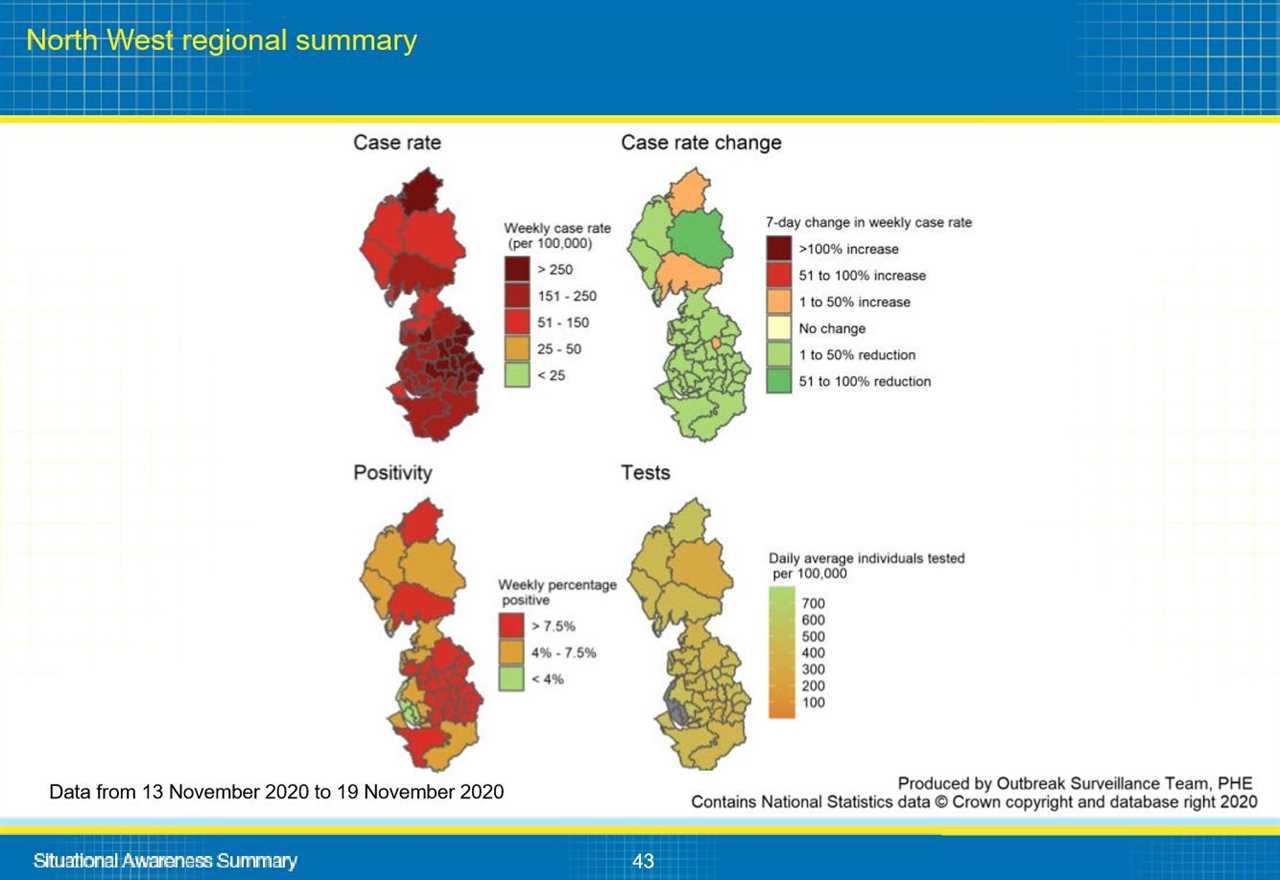
Infections have been falling across the entire North West region with 18,698 Covid cases confirmed in the last seven days.
While there are improvements in some areas, the proportion of tests
which are positive for Covid-19 remain high, particularly in Lancashire, Blackpool, and Blackburn with Darwen.
NHS PRESSURE
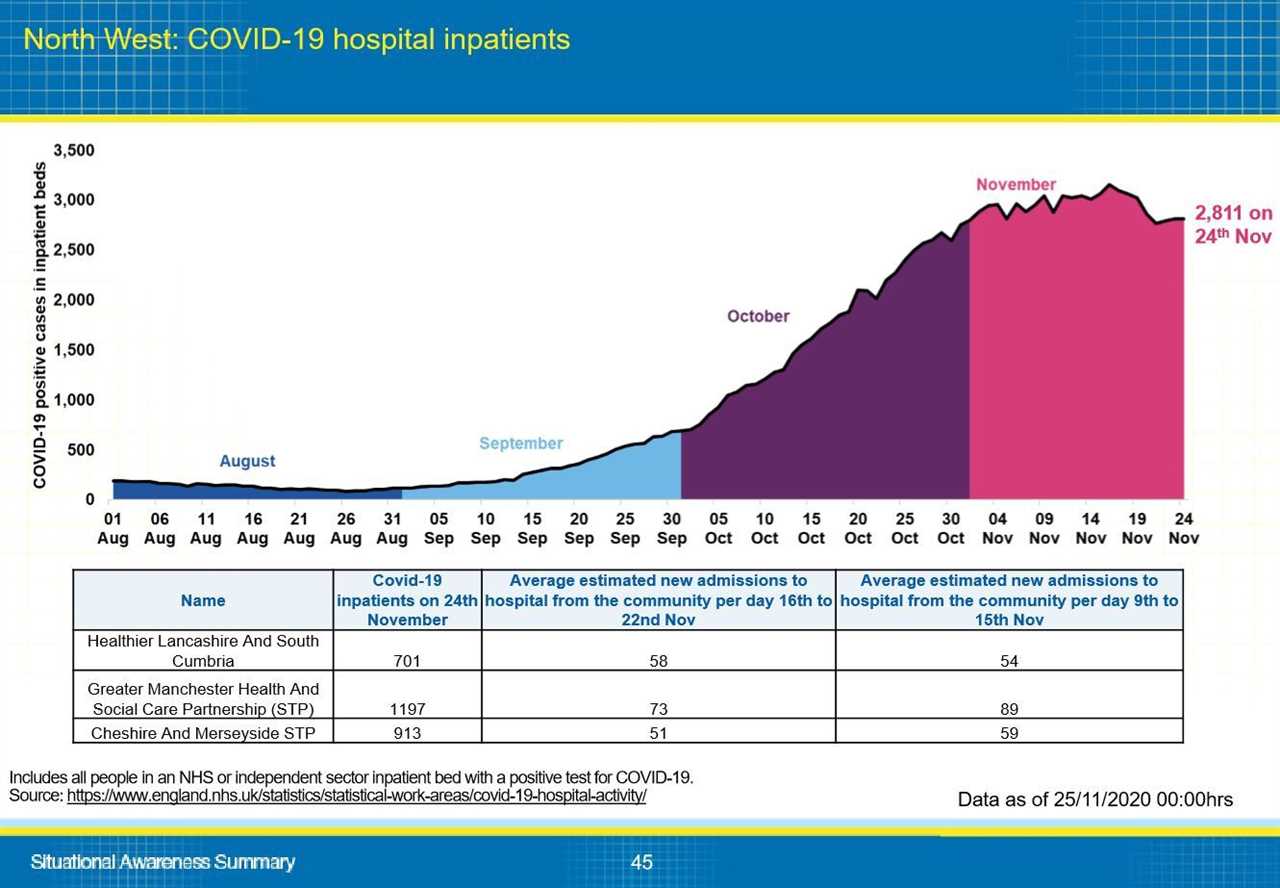
The pressure on the local NHS is decreasing in some areas but remains a concern.
Manchester University hospital and Pennine Acute Trust remain under significant pressure.
Overall, the region had 2,811 coronavirus patients in hospital as of November 24.
SOUTH EAST
Tier 3
- Kent & Medway
- Slough
Tier 2
- Hampshire, Portsmouth and Southampton
- East and West Sussex, and Brighton and Hove
- Surrey
- Reading, Wokingham, Bracknell Forest, Windsor and Maidenhead, West
Berkshire - Buckinghamshire
- Oxfordshire
Tier 1
- Isle of Wight
CASE DETECTION RATES
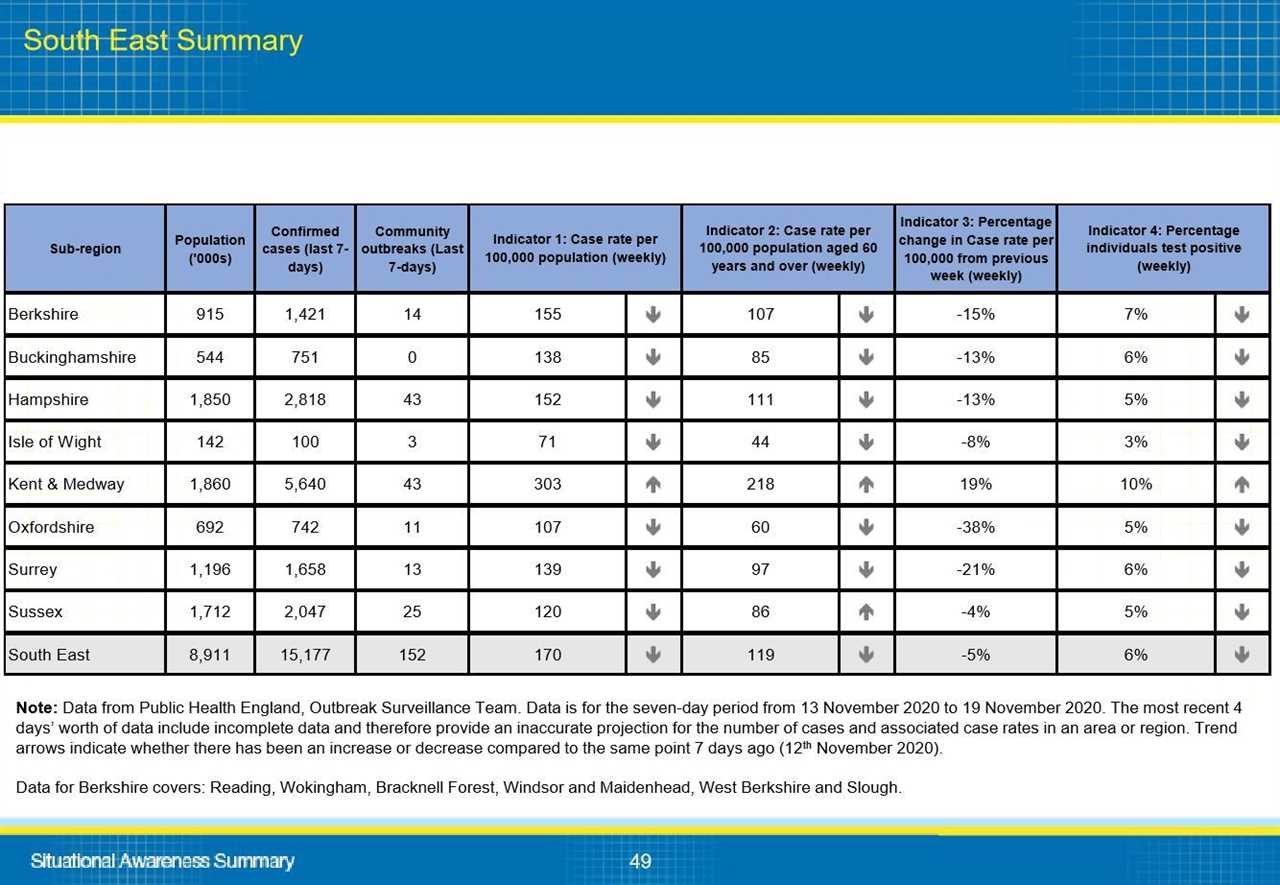
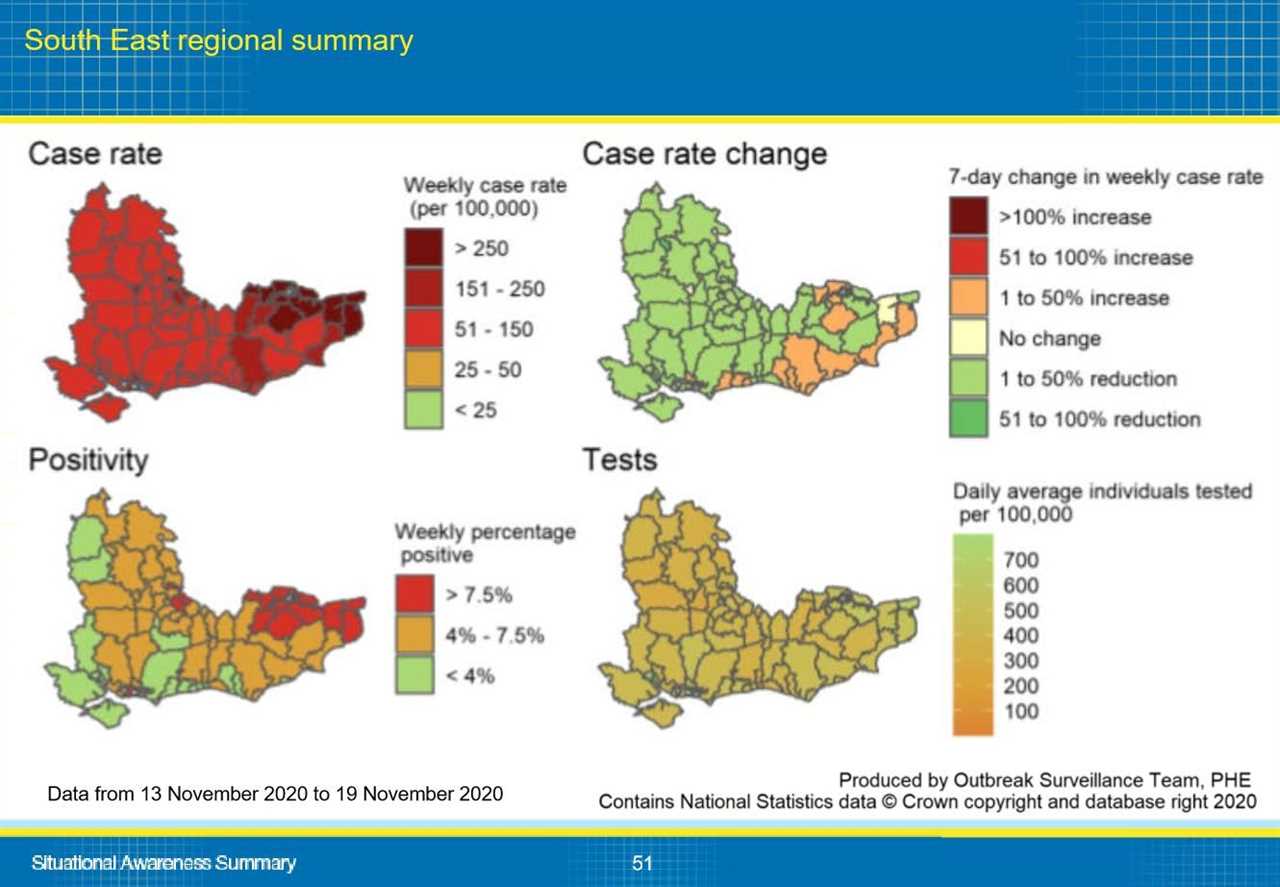
There is a mixed picture across this area although the overall case rate is now 170 per 100,000 and falling for most over 60s.
Kent is one of the areas with the highest case rates in the entire country though with infections high in the over 60s, which is a concern.
NHS PRESSURE
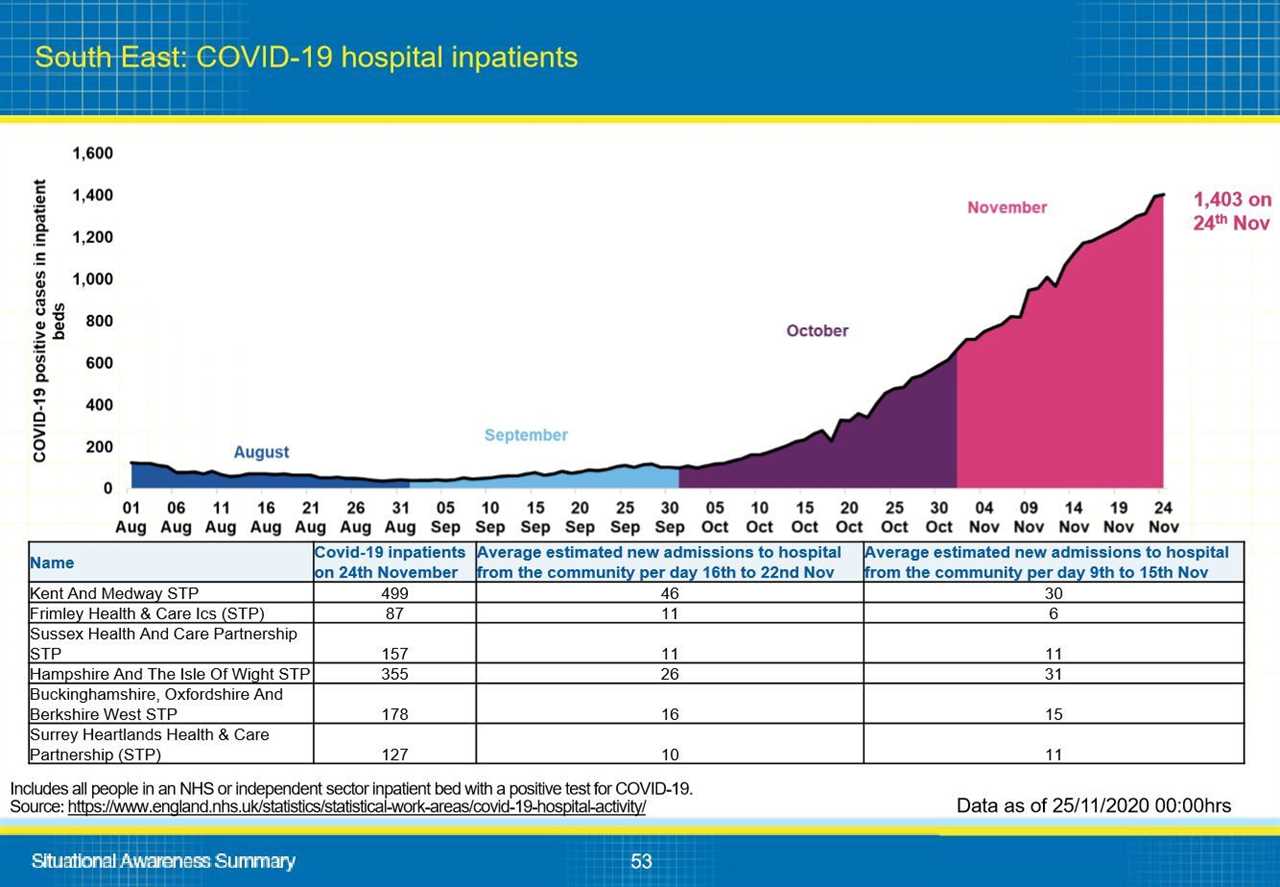
In most parts of the region, NHS pressure is low or stable with 1,403 Covid-19 patients in hospital.
But Kent And Medway STP are reporting hospital admissions are increasing, with an average of 46 new patients a day.
SOUTH WEST
Tier 3
- Bristol, South Gloucestershire, North Somerset
Tier 2
- Somerset and Bath and North East Somerset
- Dorset, Bournemouth, Christchurch and Poole
- Gloucestershire
- Wiltshire & Swindon
- Devon, Plymouth and Torbay
Tier 1
- Cornwall and Isles of Scilly
CASE DETECTION RATES
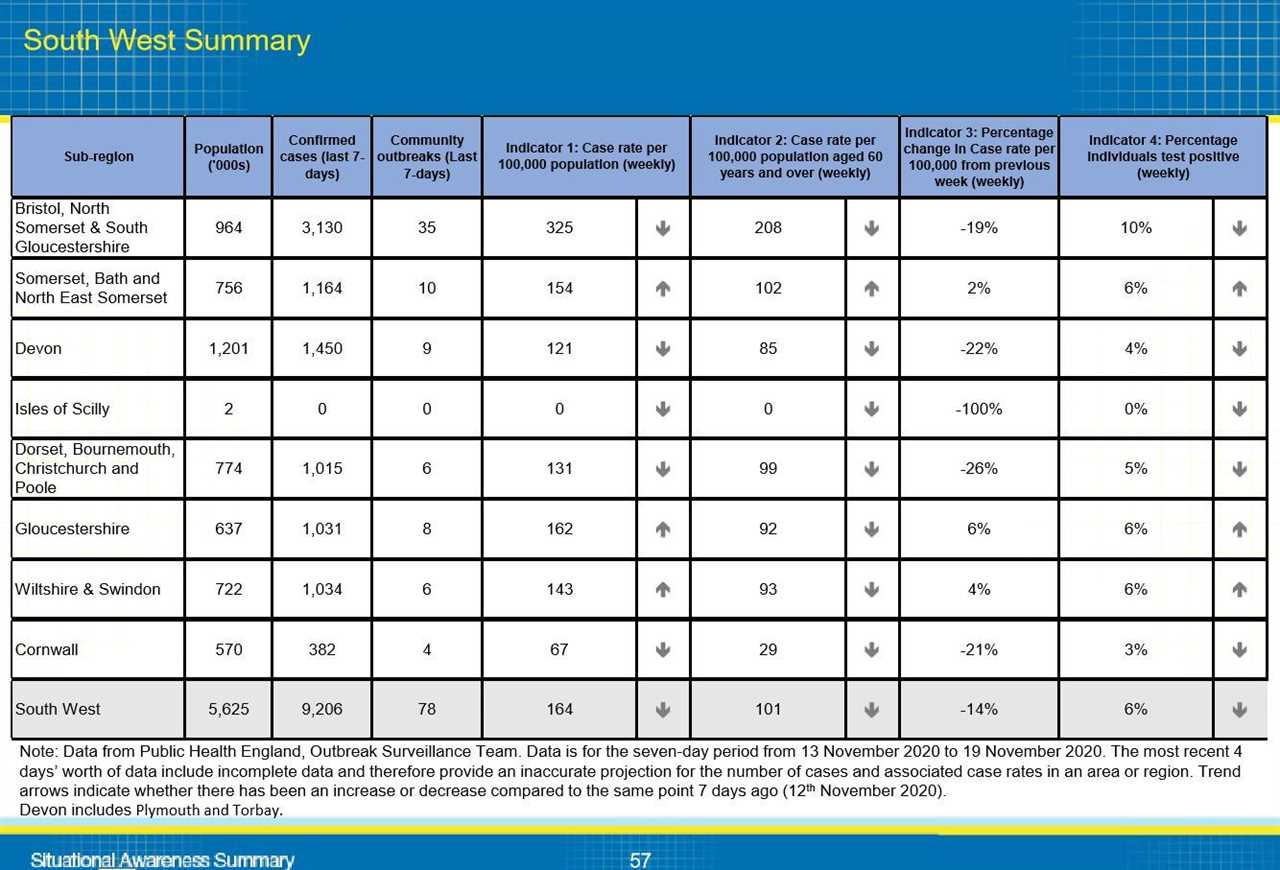
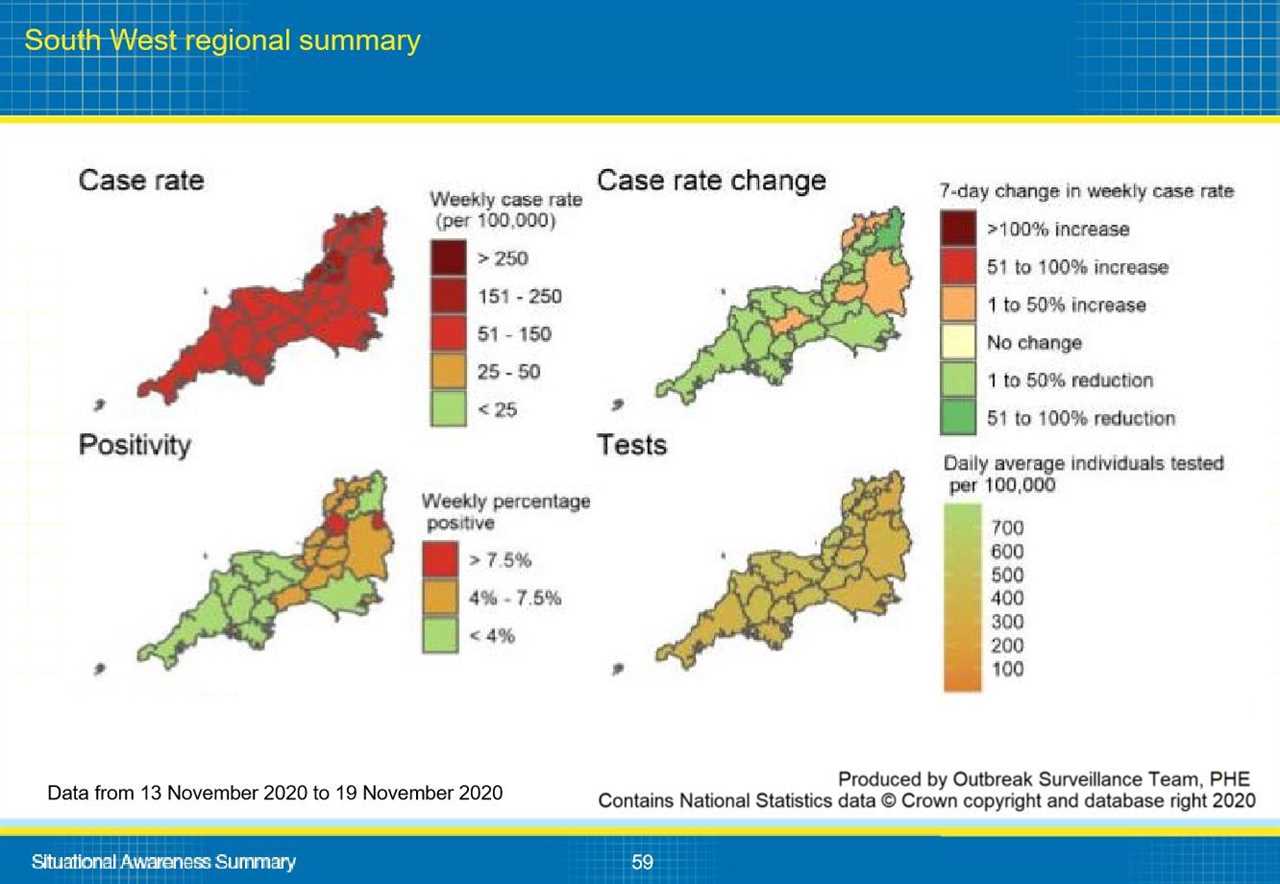
The South West is seeing a mixed picture, with Bristol, South Gloucestershire and North Somerset reporting some of the highest rates.
Case rates are particularly high in the over 60s in this area with 208 per 10,000 people.
But at the other end, Cornwall is seeing low numbers of infections with the case rates in all age groups stable or declining.
Meanwhile, there have been no cases in the Isles of Scilly in the last seven days.
NHS PRESSURE
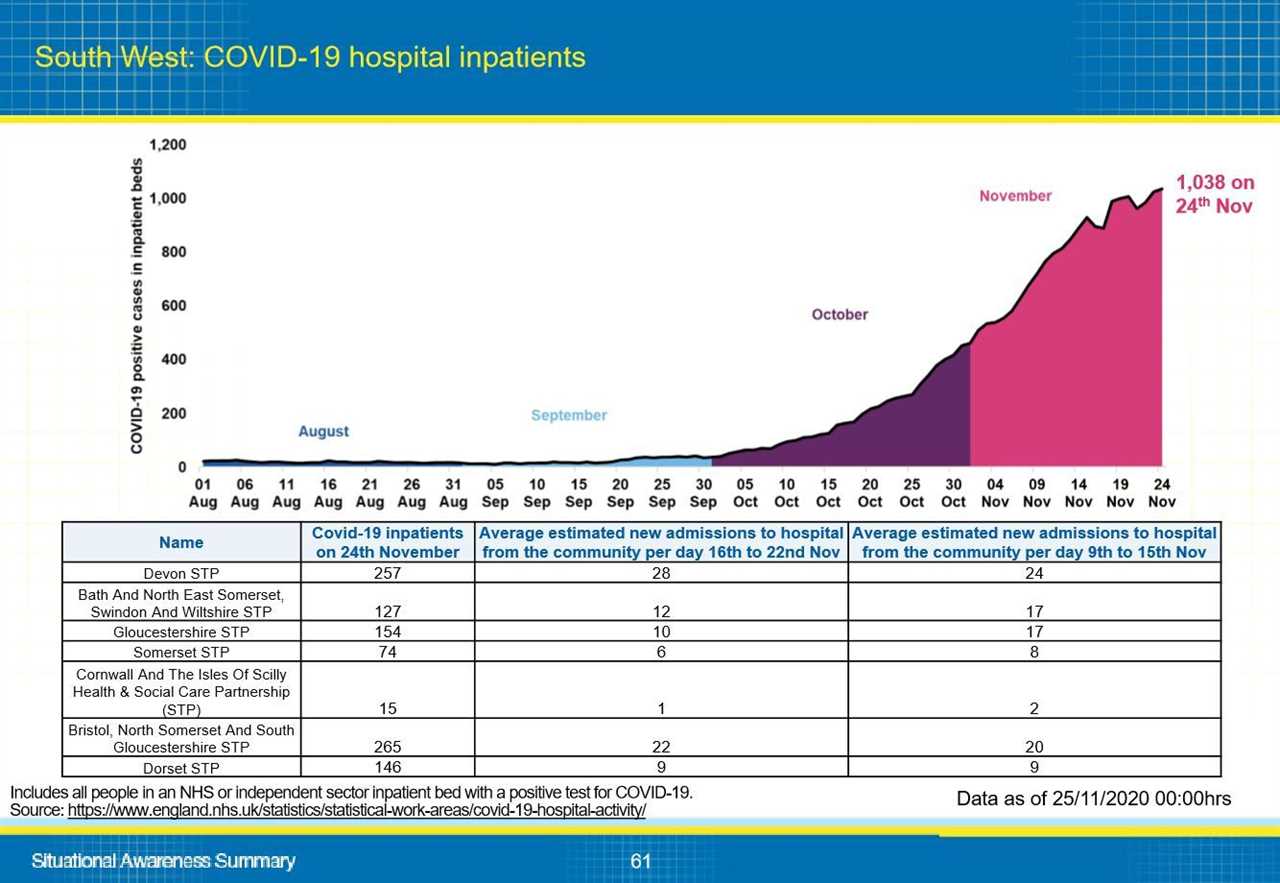
Dorset hospitals are reporting daily admissions with Covid patients are increasing.
There is also pressure at the Royal Devon and Exeter Hospital where the first Nightingale has taken patients.
WEST MIDLANDS
Tier 3
- Birmingham & Black Country
- Staffordshire & Stoke-on-Trent
- Warwickshire, Coventry and Solihull
Tier 2
- Shropshire and Telford & Wrekin
- Herefordshire
- Worcestershire
CASE DETECTION RATES
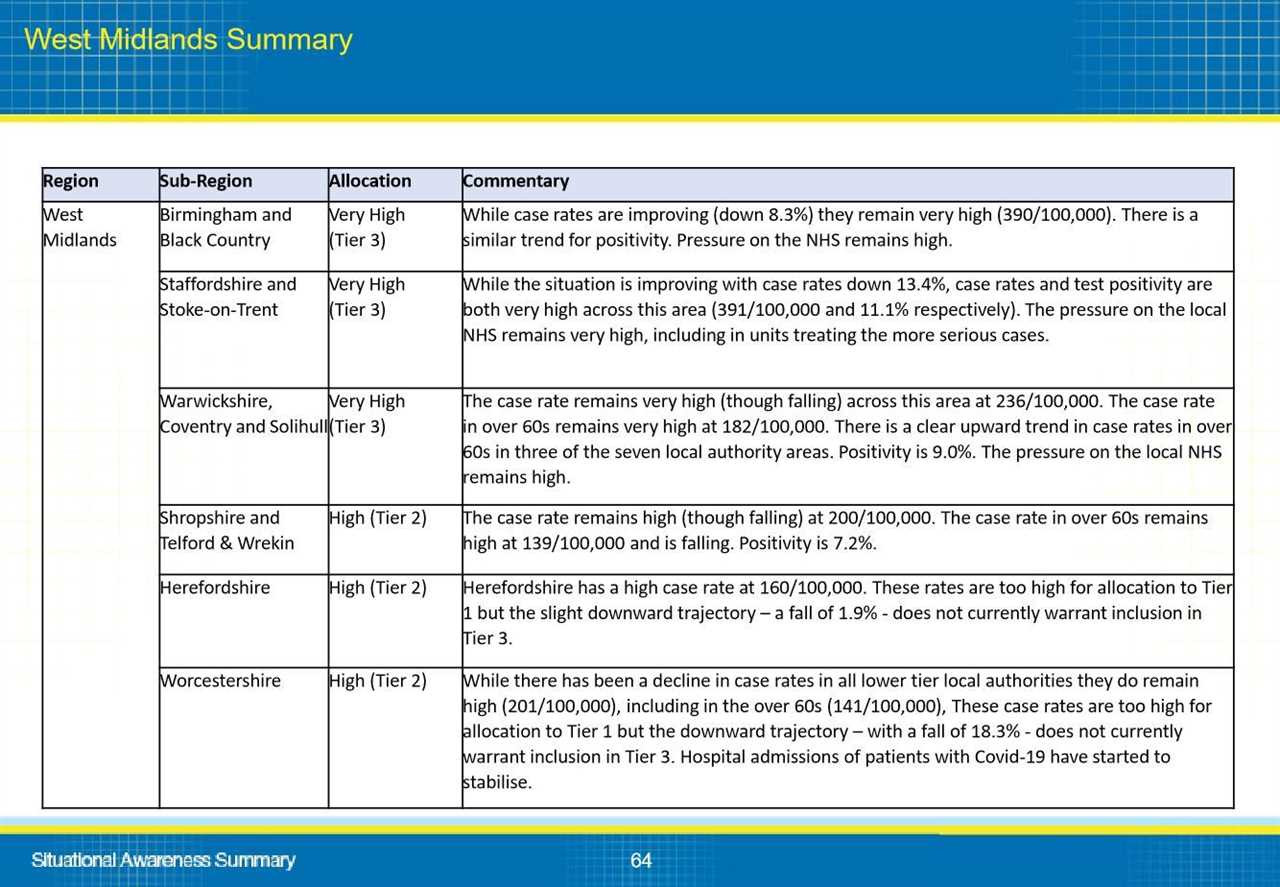
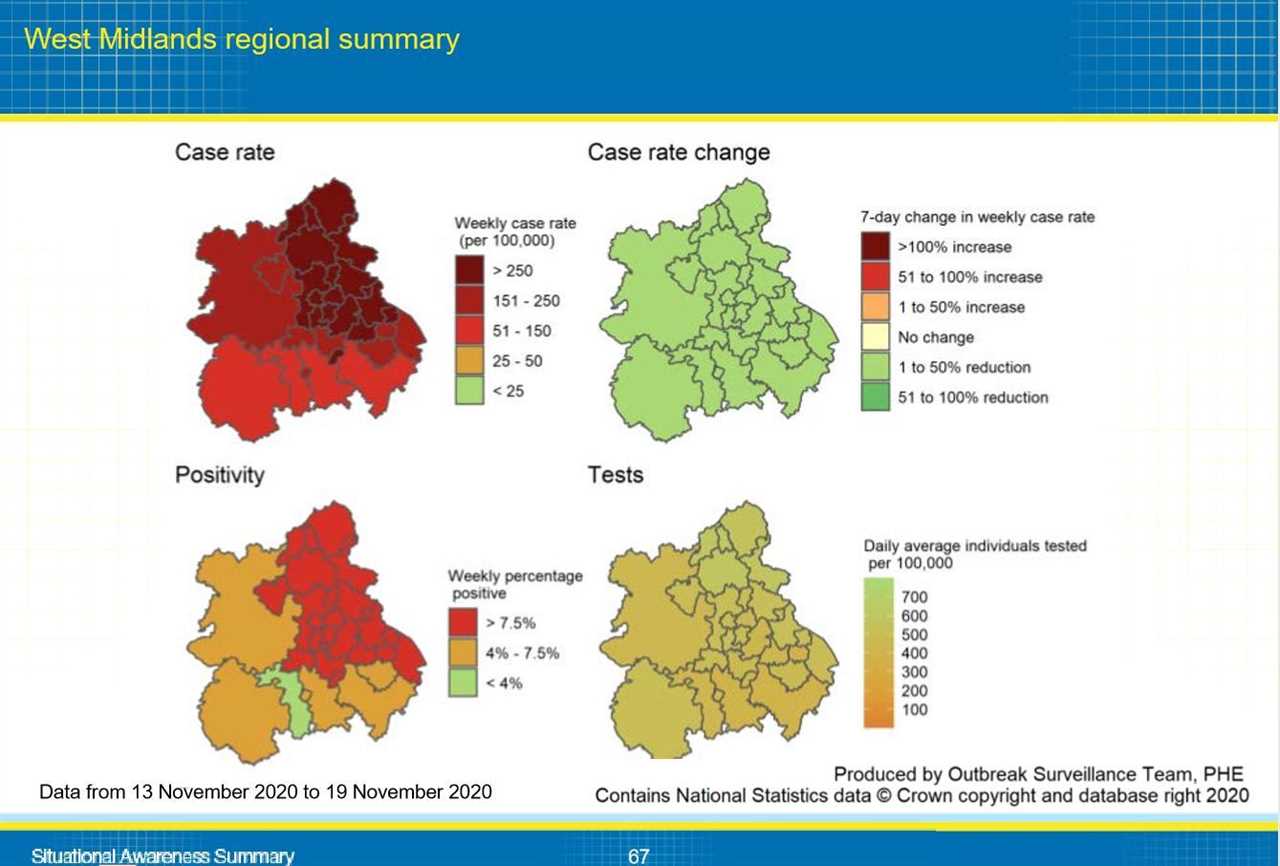
While the data shows the number of cases in the region are falling, they still remain high.
Birmingham and the Black Country is a particular concern with the case rate at 390 per 100,000 people.
NHS PRESSURE
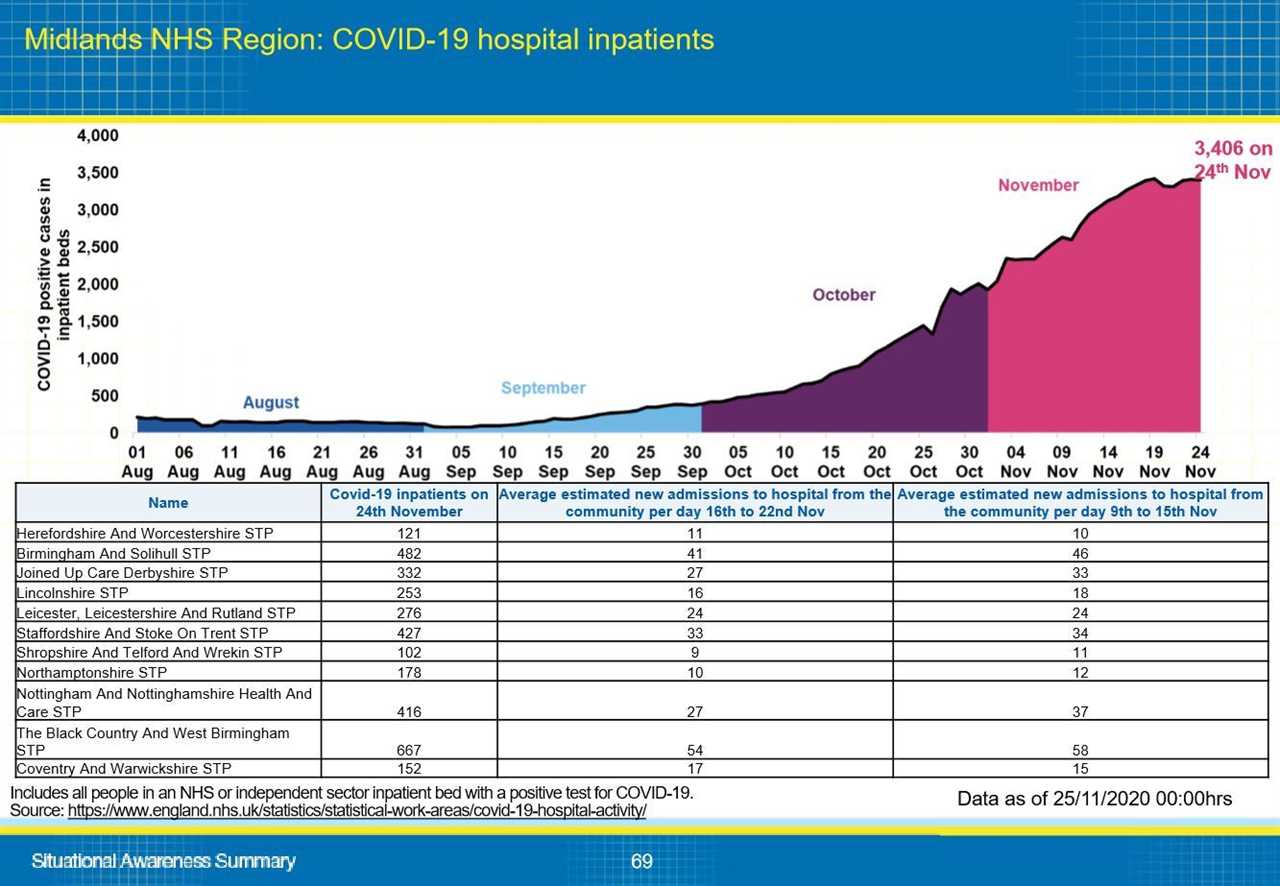
Pressure on the NHS remains high, especially in Staffordshire and Stoke-on-Trent, including in units treating the more serious cases.
In Worcestershire, the number of Covid patients has started to stabilise.
YORKSHIRE & THE HUMBER
Tier 3
- The Humber
- West Yorkshire
- South Yorkshire
Tier 2
- York and North Yorkshire
CASE DETECTION RATES
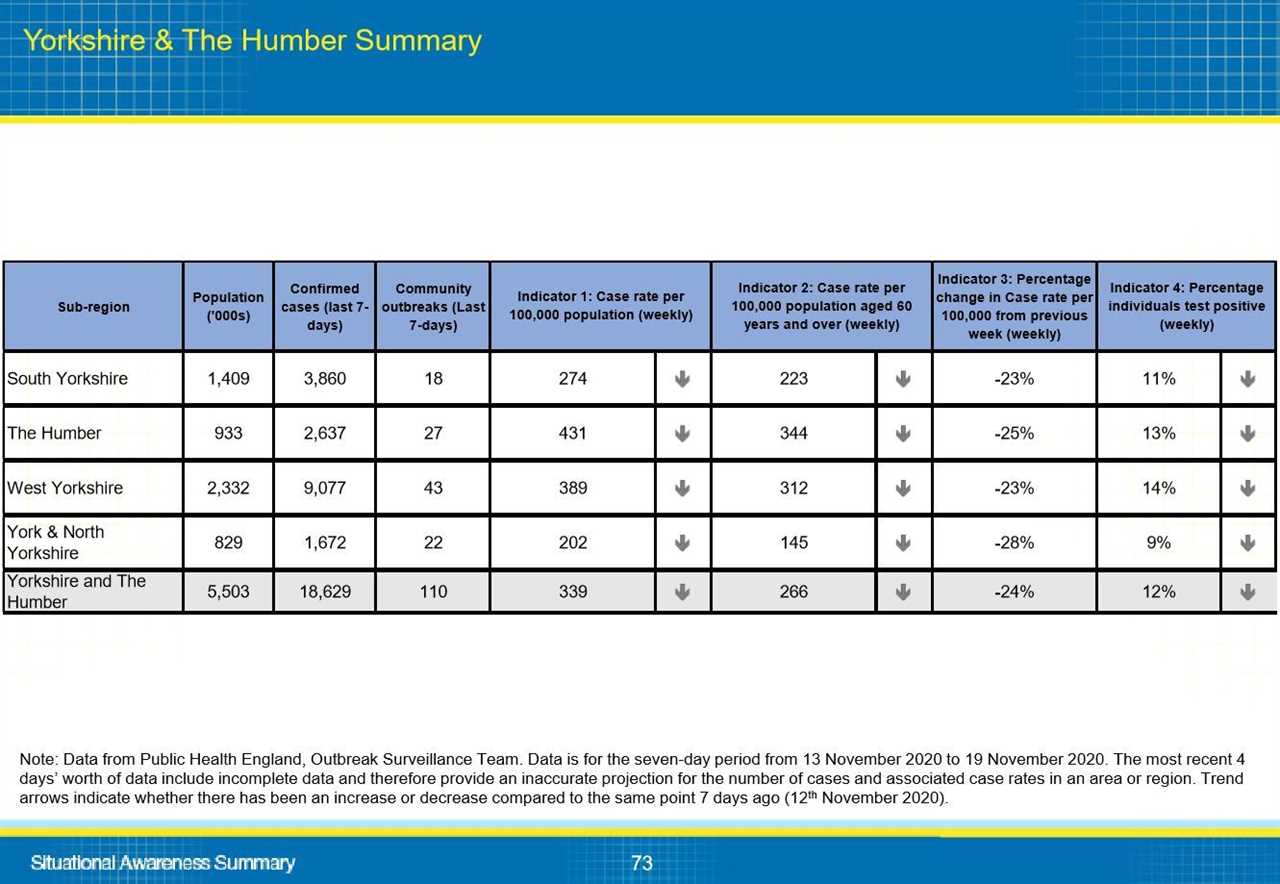
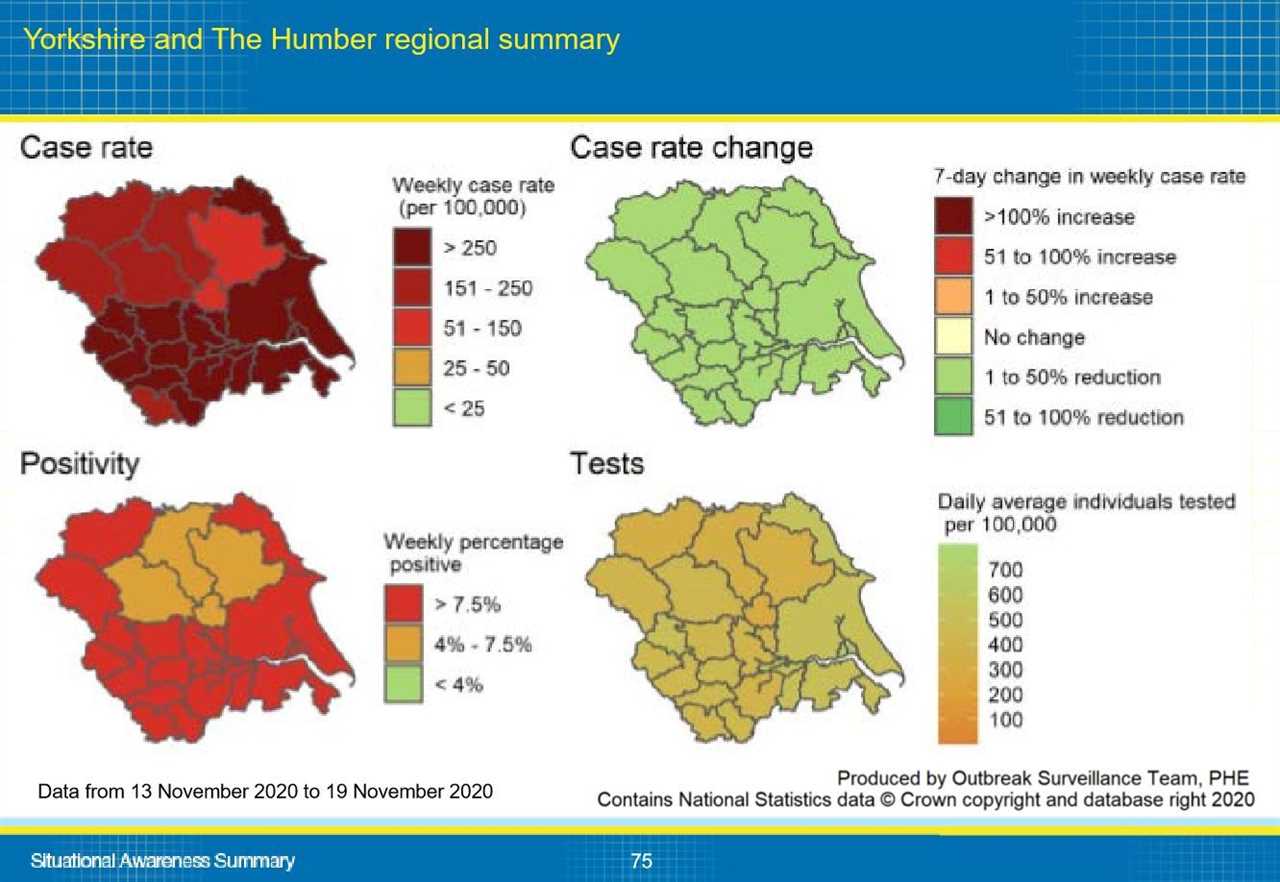
Overall case rates in this area are improving, but remain high overall for all ages and those over 60.
The Humber is seeing some of the highest case rates with 431 per 100,000 people.
NHS PRESSURE
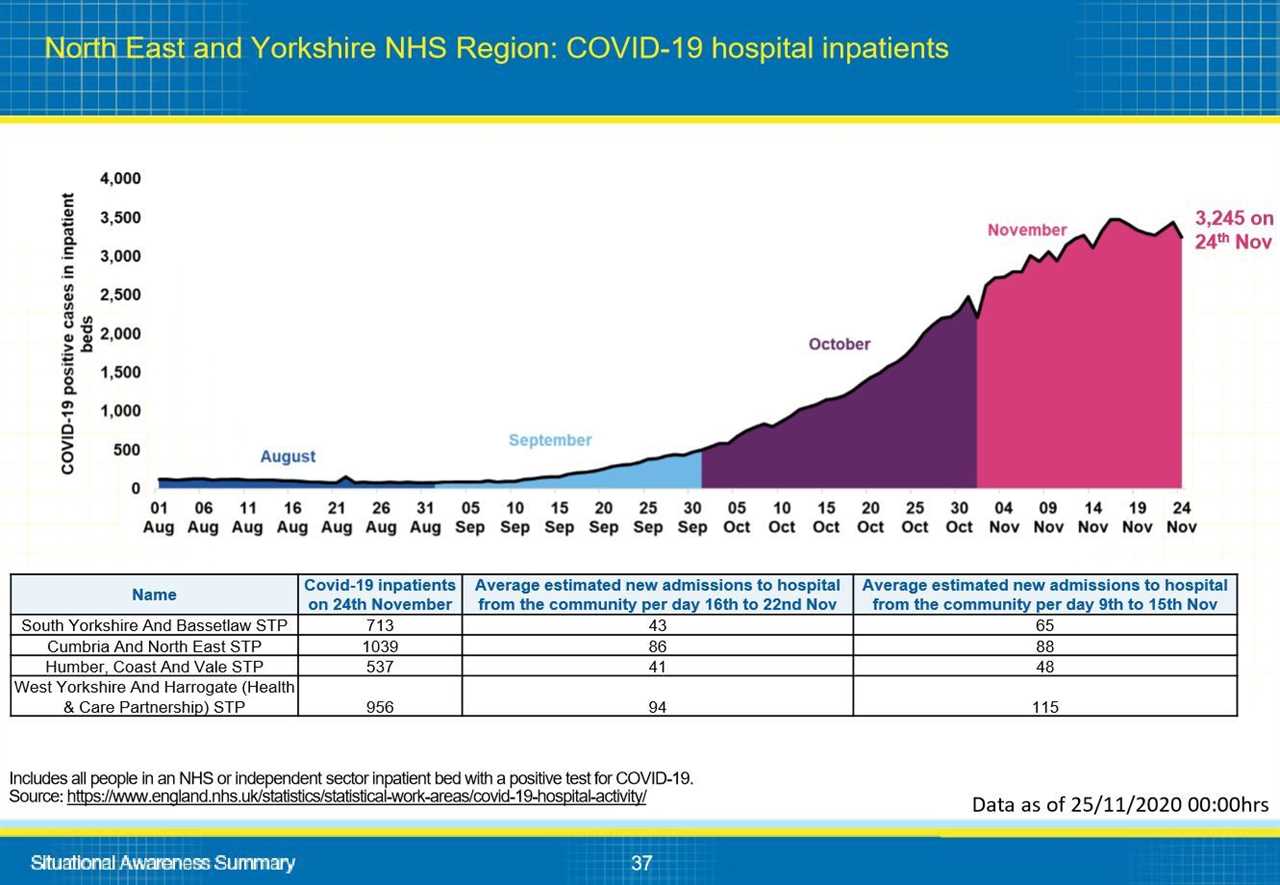
There is ongoing pressure on the local NHS, according to Public Health England.
As of November 24, there were 3,245 Covid-19 positive patients in hospital across the region.