
The team behind the Oxford Covid jab has created a vaccine that could “revolutionise” cancer treatment.
The jab will be tested in humans for the first time after promising results in animal experiments.
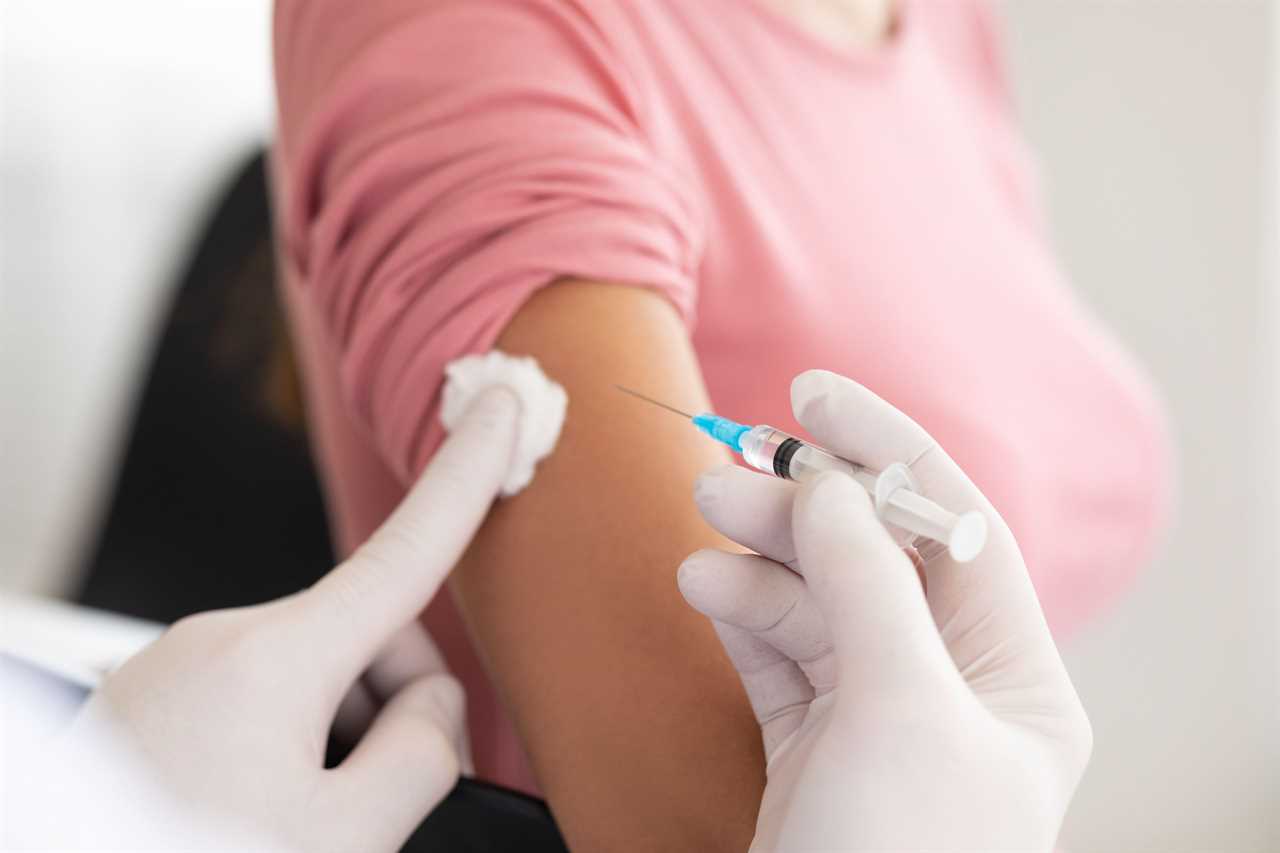
The cancer vaccine was able to shrink tumours in mice and even improve their survival rates when combined with another therapy that turns a person’s immune system against cancer, report the Times.
The first human trial will involve 80 patients diagnosed with non-small cell lung cancer.
The Oxford team said the jab is based on the same “viral vector” technology that was used in the OxfordAstraZeneca Covid-19 jab.
Briefly, in the Covid-19 vaccine, genetic material is transported to a person’s cells through a harmless virus in a bid to train the immune system to fight off the actual virus.
However, in the cancer jab, the genetic material prompts the body to respond to molecules called MAGE proteins which are found on cancer cells.
The jab aims to boost T-cells to attack cancer.
Professor Adrian Hill, director of the Jenner Institute at the university told the outlet: “This new vaccine platform has the potential to revolutionise cancer treatment.”
Benoit Van den Eynde, professor of tumour immunology at the University of Oxford, said: “We knew that MAGEtype proteins act like red flags on the surface of cancer cells to attract immune cells that destroy tumours.
“Importantly for target specificity, MAGE-type antigens are not present on the surface of normal tissues, which reduces the risk of side effects caused by the immune system attacking healthy cells.”
A study has shown that the Oxford Covid jab, given to 25million Britons, is the best at keeping people out of hospital.
As well as generating virus-busting antibodies, the vaccine also creates “training camps” in the body for search-and-destroy T-cells which can kill even new variants.
It means the body can continue making these vital cells long after the antibodies have waned – as possibly for the rest of your life.